REVIEW · LAOS
Plain of jars private tour
Book on GetYourGuide →Operated by tours by group travel company · Bookable on GetYourGuide
Those jars change how you see Laos.
I really like how this private day blends archaeology-focused guiding with easy Q-and-A time as you travel. You also get a rice-field walk on the way to one of the main sites, so the visit feels connected to how people live now—not just what happened long ago.
The route is packed into one day, so a few stops are on the shorter side and you’ll do best if you’re comfortable with driving and moving between sites. If you want a slower, more relaxed pacing with longer pauses at each jar location, you might find the schedule a touch tight.
In This Review
- Key things I’d circle on your map
- The Plain of Jars: why this site feels so big
- One-day pacing from Phonsavan: how the day actually flows
- Ban Naphia tourist attraction: your first hour of context
- Ban Na Phia spoon-making village: when war metal becomes everyday tools
- Site 3 at Ban Xieng Di: rice fields, then the jars
- Site 2 at Ban Nakho: Phousalato hills and wide views
- Lunch in Ban Nakho: recharge before the ruins
- Muang Khoun former capital ruins: Wat Phia Wat and That Foun
- The 89HC+727 guided stop: brief, but part of the flow
- Site 1, the largest plain: 334 jars and the biggest payoff
- Wat Hai Heen pass-by and the big Buddha statue moment
- Price and value: is $110 per person a fair deal?
- Who this tour fits best (and who might want a different pace)
- Should you book the Plain of Jars private tour from Phonsavan?
- FAQ
- How long is the private Plain of Jars tour?
- Where is pickup included?
- What time does the tour start?
- What language is the guide?
- What’s included in the price?
- What is not included?
- Is the group private?
Key things I’d circle on your map
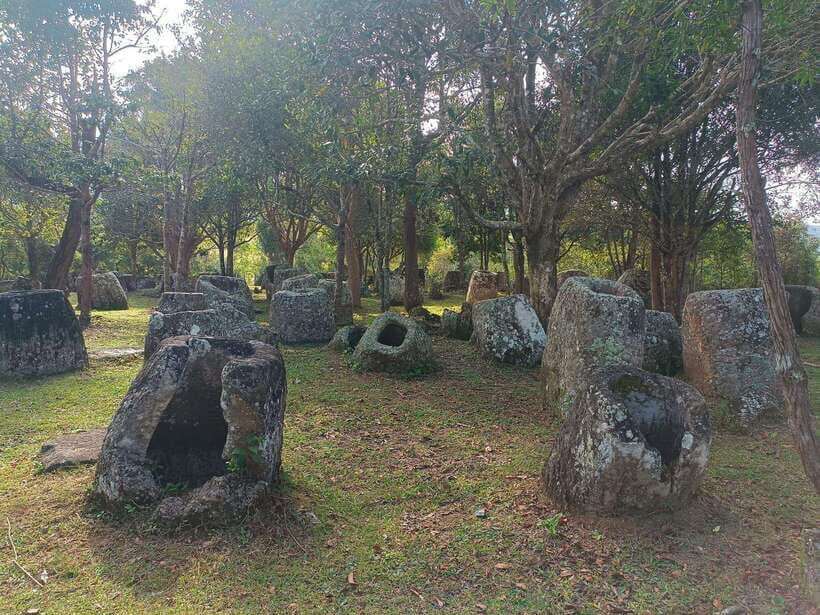
- Three major Plain of Jars areas in one day, including the biggest site with 334 jars
- Rice-field walking segment on the approach to Site 3 (Ban Xieng Di)
- Ban Na Phia spoon-making village, including daily spoon production for local trade
- Muang Khoun former capital ruins with Wat Phia Wat and That Foun stupa
- Panoramic views from Site 2 on the hills of Phousalato mountain
The Plain of Jars: why this site feels so big
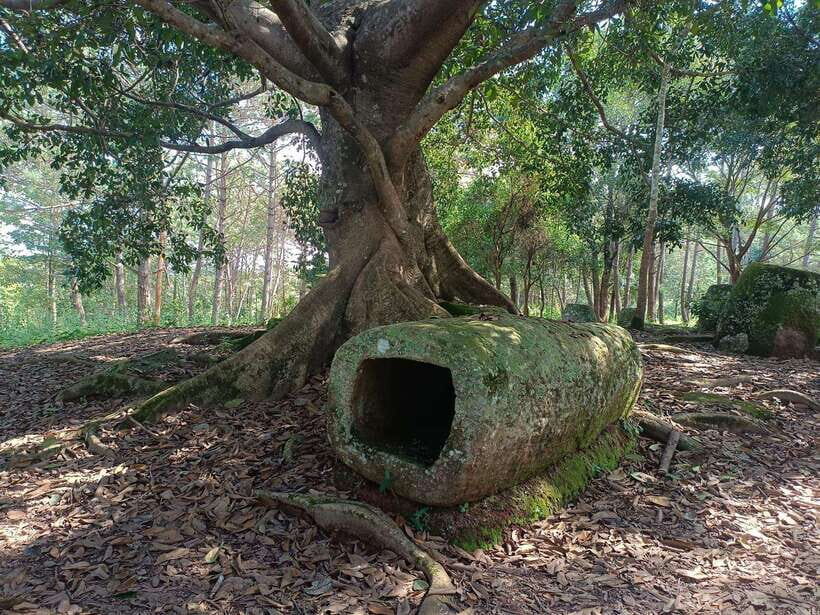
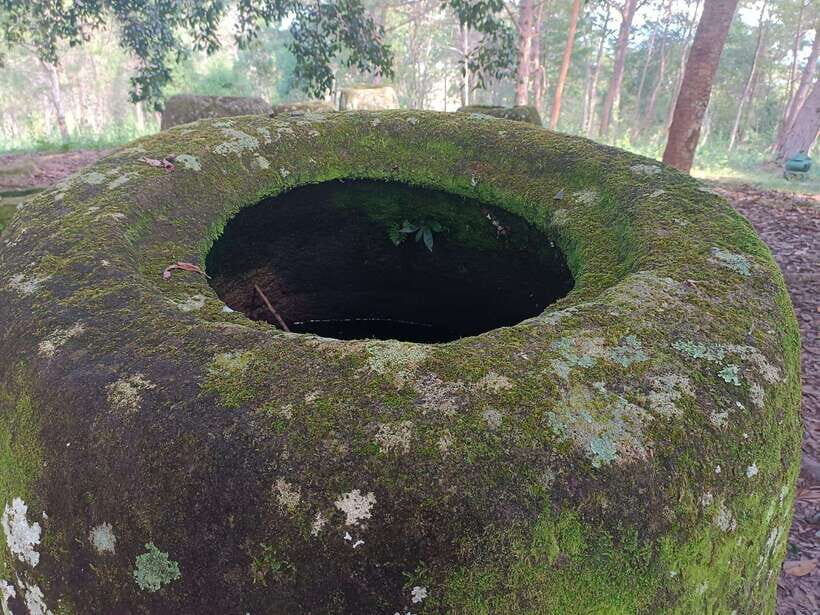
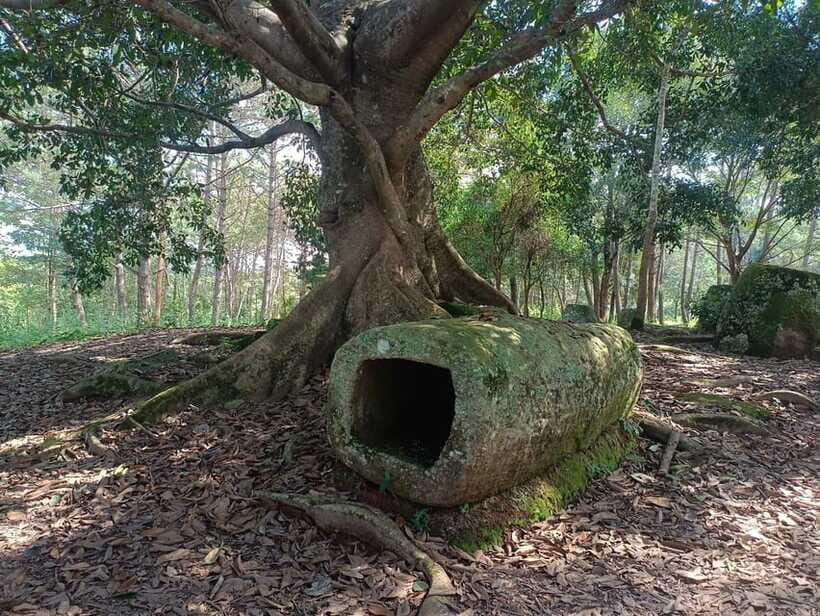
The Plain of Jars isn’t one neat museum stop. It’s a whole archaeological zone across Xiangkhouang Province, with jars scattered over a wide area. Estimates put it at more than 1,000 jars, and the tour focuses on three key areas that are widely used for visiting.
What makes it special is the scale. You’re not just seeing a handful of stones; you’re looking at hundreds (and, in the largest site, 334 jars) across different hillsides and pockets of farmland. The effect is instant: your brain has to accept that this was once a major cultural landscape.
And the guiding matters here. A good guide helps you keep the questions straight—what you’re seeing, how the jars are grouped at each site, and why each area offers a different view of the same overall phenomenon.
You can also read our reviews of more tours and experiences in Laos.

One-day pacing from Phonsavan: how the day actually flows
This is a full, structured day starting with hotel pickup around 8:30 AM in Phonsavan. You’ll be in an air-conditioned vehicle for the transfers between stops, and the day is designed to hit the highlights before you return late afternoon.
The rhythm goes like this: you start with a local attraction near the first stop, then move into jar territory (including Site 3 and Site 2), refuel with lunch, continue to the Muang Khoun ruins, then finish at the largest jars area (Site 1). On the way back, there’s also a pass-by and short visit connected with a major Buddha statue site.
For most people, the time structure works because each major jar area gets its own attention window. For you, the key is mindset: treat it as a highlight tour. Bring your questions, take photos when you want, and then listen when your guide points out how the jars sit in relation to the hills and fields.
Ban Naphia tourist attraction: your first hour of context
The day begins with a guided visit to Ban Naphia tourist attraction for about an hour. Even though this first segment isn’t described in jar-specific terms, it’s a helpful start. You’ll get time to settle into the area, check your footing, and use that first hour to learn how your guide frames the region before the day gets jar-intense.
If you’re prone to information overload, this first stop is also a good breather. By the time you reach the jar sites, you’ll understand what to look for and you’ll be ready to ask questions in a more targeted way.
Ban Na Phia spoon-making village: when war metal becomes everyday tools
After your first stop, you’ll visit Ban Na Phia, a spoon-making village where families produce around 1,000 spoons each day and trade them through local markets. It’s not a craft demo designed to feel like a performance. You’re seeing a real working rhythm tied to what people can make and sell locally.
The tone can feel mixed. One review note points out the spoons are made using recycled war material, which can shift the emotional weight of the visit from casual shopping to something more reflective. That doesn’t make it automatically wrong—it just means you should go in aware that this is not just souvenir production. If you’re sensitive to that kind of history, give yourself a moment before you browse.
Practical tip: if you’re considering buying a spoon, decide early what you want it for—use, memory, or gift—then spend accordingly. Handicraft purchases aren’t included, and the village is exactly the sort of place where it’s easy to end up with extras.
Site 3 at Ban Xieng Di: rice fields, then the jars
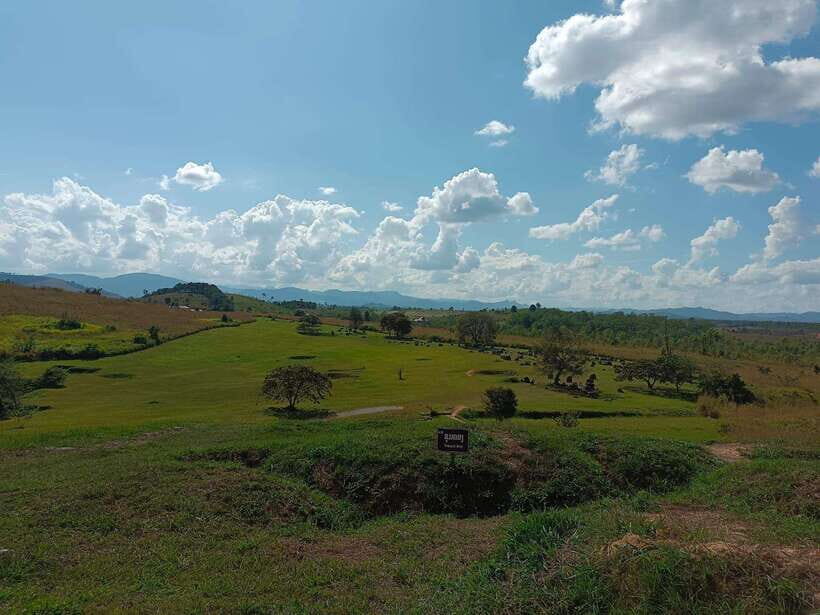
Next is Plain of Jars Site 3, tied to Ban Xieng Di. The tour starts with the tickets office area for Site 3, then you move into the visit itself. Expect about an hour total for this portion.
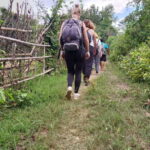
One of the most memorable parts here is the walk. It’s around 10 minutes to reach the jars, and you’ll do it through rice fields. Your guide will explain the rice plantation, which is a small detail but it changes the whole way you experience the site. You’re not just walking past scenery; you’re walking through an agricultural system that still shapes the land.
That matters because the Plain of Jars isn’t floating above everyday life. It sits in a province where farming continues. The rice walk gives you a human scale for the setting, so the jars feel less like isolated artifacts and more like something integrated—however long ago it was made.
Possible drawback: Site 3 is powerful, but the approach is time-limited. If you love slow photography and extended silence, you might wish you had extra minutes at each jar cluster.
Site 2 at Ban Nakho: Phousalato hills and wide views
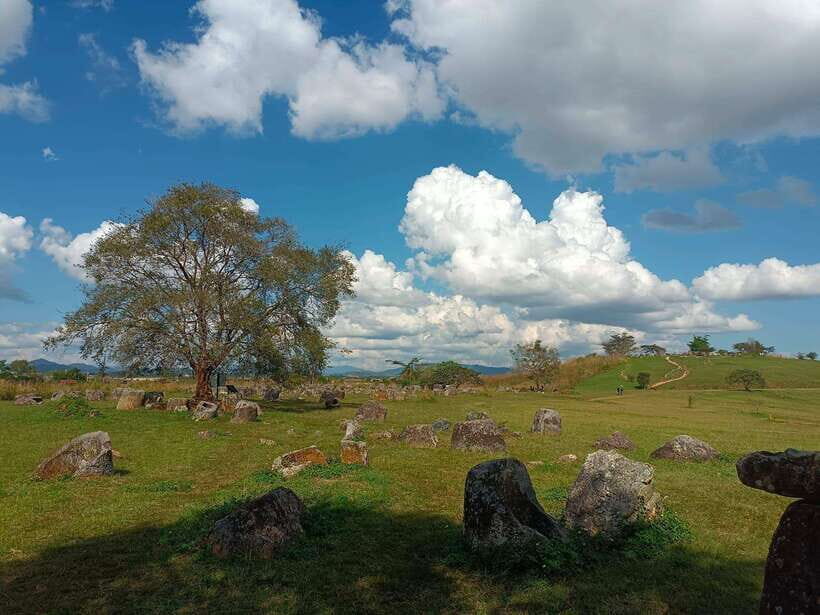
Around 11:45 AM, you’ll head to Plain of Jars Site 2 in the Ban Nakho area. This section includes views from the two hills of Phousalato mountain, and your guide points out the panoramic outlooks along with the jar concentration—estimated at 100 jars for this viewpoint area.
The hills are part of the point. You’ll see how the jars relate to the slope and how the grouping changes from angle to angle. Even if you’ve seen jar photos before, arriving in person makes you understand why the locations matter. The jar placement looks different depending on whether you’re standing high on a rise or looking across open ground.
Timing-wise, you’ll get about an hour here, which is enough to see the main viewpoint and absorb what your guide is showing without rushing into the next stop immediately.
Lunch in Ban Nakho: recharge before the ruins
After Site 2, the tour plans lunch at a local restaurant in Ban Nakho (around 12:30 PM). Lunch is included, with a local menu, which is a smart value move on a day like this. You avoid the hassle of hunting food between jar areas, and you get a chance to eat in the place you’re already visiting.
You’ll still want to plan your drinks because soft drinks are not included. Keep water handy in your bag too—this region can be warm, and you’ll be out in open areas across the day.
Muang Khoun former capital ruins: Wat Phia Wat and That Foun
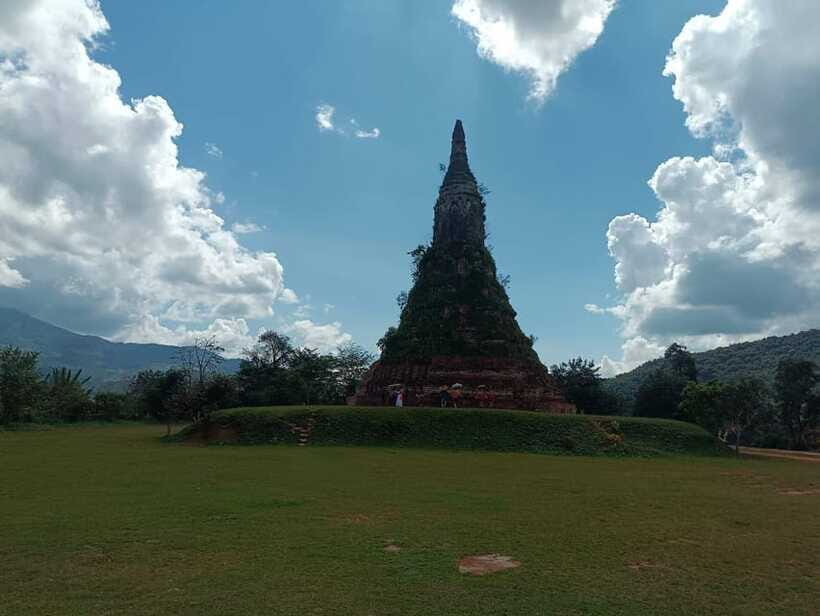
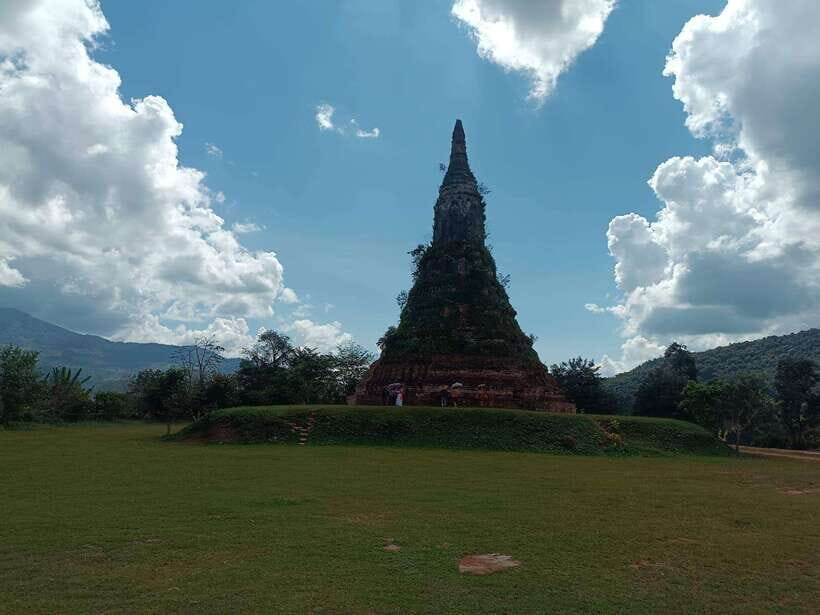
Late in the morning and early afternoon, the tour shifts from the jars to the story of Muang Khoun, the former capital area of Xieng Khouang Province. You’ll visit ruins connected to Wat Phia Wat and That Foun stupa.
This stop is meaningful because it connects the jar landscape to more recent layers of history. One highlight detail here is that the remains reflect the Vietnam war era. That gives the day a sharper emotional lens: you’re not just looking at ancient objects; you’re also looking at how people rebuilt, lived with conflict impacts, and carried on.
There’s also a defined time block here—Wat Phia Wat and That Foun are part of an included guided visit around 2:30 PM into the afternoon. The visit doesn’t try to make this a long documentary. It’s a guided look that helps you understand why these locations still matter.
The 89HC+727 guided stop: brief, but part of the flow
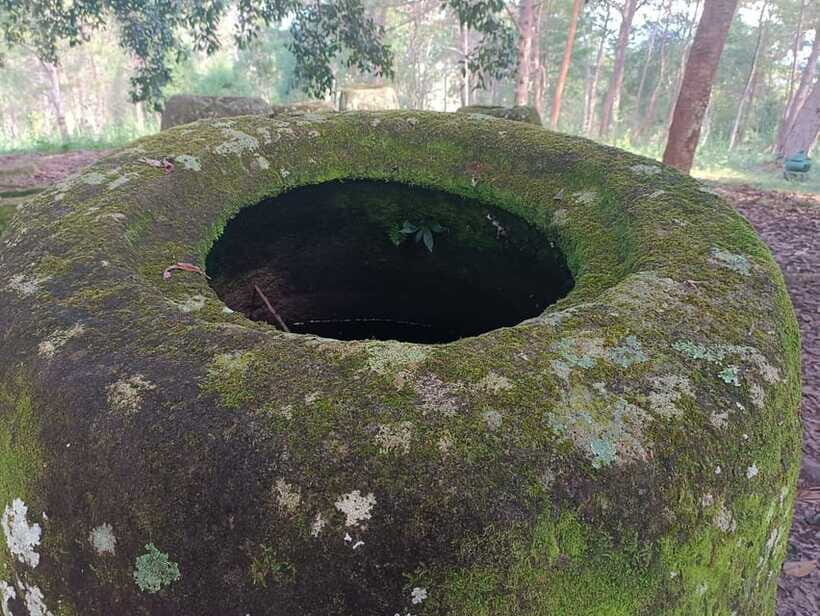
Your day also includes a guided segment listed as 89HC+727 (about 30 minutes). The tour schedule treats it as a stop between the jar areas and the stupa/ruins timing.
Because the name isn’t specified beyond the code, I’d treat this segment as a quick orientation or local viewpoint stop. In practical terms: keep your energy steady, use the time to ask any last questions you want answered, and don’t plan on it being the emotional highlight of the day.
Site 1, the largest plain: 334 jars and the biggest payoff
The afternoon highlight arrives with Plain of Jars Site 1, often described as the largest of the visited areas. This portion is planned for about an hour, and the jar count is a standout detail: the largest site is noted as 334 jars.
When you arrive here, you understand why this stop anchors the whole tour. The scale is bigger than the other areas, and the day’s earlier walks and viewpoints start to click into place. You’re seeing the same overall concept—jars in specific groupings across the terrain—but now the sheer number creates a different kind of impact.
If you only have time for one jar site on a short visit, this is usually the one people remember. And in a one-day plan, it’s the logical finish because you end with the strongest “wow” before the drive back toward Phonsavan.
Wat Hai Heen pass-by and the big Buddha statue moment
On the way back, the itinerary includes a pass-by of Thonghaiheen Xaiyalam Temple (Wat Hai Heen) and also a drive past Wat Haihin big Buddha statue with a short visit. This portion isn’t meant to steal the show from the jars. It’s more like a gentle cultural bookend.
I like this kind of stop because it gives you something visually different after hours of jar scenery. It also breaks up the driving monotony with short photo opportunities and a chance to stretch.
Price and value: is $110 per person a fair deal?
At $110 per person for a private one-day tour, this is priced like a full service day out of Phonsavan rather than a cheap group shuttle. The value comes from what’s included:
- Air-conditioned vehicle for transfers
- Entrance fees and all fees and tax
- Lunch (local menu)
- A live guide in English and Thai
- A structured route that hits multiple major areas: Site 3, Site 2, Muang Khoun ruins, and Site 1
What isn’t included is mostly the stuff you can predict: soft drinks and personal spend (like handicrafts). If you’d otherwise pay for separate transport and separate admission tickets, the package is often easier math than assembling your own day.
For me, the strongest value signal is the fact you’re not just visiting one jar cluster. You’re getting a complete arc: jars across multiple sites plus Muang Khoun’s ruins, all within one organized day.
Who this tour fits best (and who might want a different pace)
This one-day private tour is a great fit if you want to see the main highlights without negotiating transport, ticket stops, and timing on your own. It’s also ideal if you enjoy asking questions—your guide is there to explain what you’re looking at and answer your curiosities about the country and people.
You might reconsider the day if:
- you hate tight time blocks and prefer long, slow stays
- you’re very sensitive to the emotional weight that can come with the spoon village’s link to repurposed wartime material
- you want a more in-depth, multi-day dive into each site rather than a “best of” approach
Should you book the Plain of Jars private tour from Phonsavan?
I’d book it if you want the most important jar sites in one day, plus Muang Khoun ruins, with a guide who can explain what you see and help you place it in context. The combination of three major Plain of Jars areas, the rice-field approach at Site 3, and the 334-jar scale at Site 1 makes this a high-impact visit.
If you know you’ll struggle with an active schedule, you can still enjoy it—but go with the right expectations. This is structured, timed, and designed for highlights. Pack light, bring water, and be ready for a day that moves. If that sounds like your kind of travel, you’ll likely come away with clearer images of the jars and the region than you could get from a half-day stop.
FAQ
How long is the private Plain of Jars tour?
The tour runs for one day.
Where is pickup included?
Pickup is included in Phonsavan. You should provide the correct address for the pickup.
What time does the tour start?
The schedule lists hotel pickup and the start of the tour at about 8:30 AM.
What language is the guide?
The live tour guide speaks English and Thai.
What’s included in the price?
Included items are an air-conditioned vehicle, lunch (local menu), entrance fees, and all fees and tax.
What is not included?
Soft drinks and personal spending, such as handicrafts, are not included.
Is the group private?
Yes, this is a private group experience.