REVIEW · LUANG PRABANG
Luang Prabang: Almsgiving Ceremony Offering
Book on GetYourGuide →Operated by Worldwide Travel · Bookable on GetYourGuide
Tak Bat happens early, before the day gets loud. In Luang Prabang, it’s one of the most moving ways to see daily Buddhist life up close—Tak Bat on the street, then a temple stop to make sense of what you just witnessed.
I especially like how practical it is: you’re not just watching, you’re given a traditional offering set and taught how to take part respectfully. The main drawback is also the most important one: transfer to the ceremony spot isn’t included, so you need your own way there and to be on time.
In This Review
- Key things that make this experience worth your morning
- Tak Bat at sunrise: what you’re really seeing
- Meeting around L’Elephant and finding your spot
- The offering: sticky rice, banana, and doing it the right way
- Wearing modest clothes and keeping the moment calm
- What your guide actually does for you
- Timing: a short 1-hour window that still feels complete
- The temple visit after Tak Bat: putting meaning on what you saw
- Photos, silence, and how to behave like a respectful guest
- Price and value: why $25 can make sense here
- Who this is best for (and who should skip it)
- Should you book Tak Bat in Luang Prabang?
- FAQ
- How long is the Luang Prabang almsgiving ceremony?
- What’s included in the offering set?
- Do I need to arrange transportation to the ceremony spot?
- Are flash photos allowed?
- What should I wear?
- What languages is the live guide available in?
Key things that make this experience worth your morning
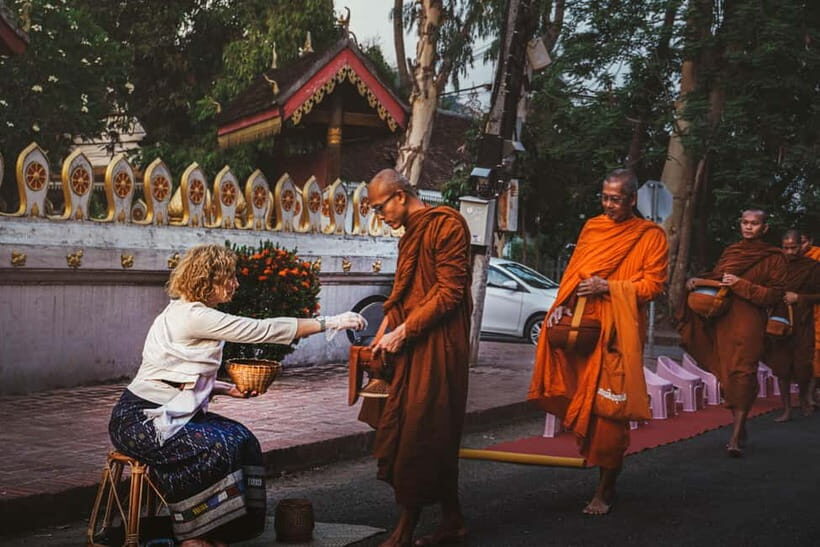
- You participate, not just observe: a traditional offering set is provided (sticky rice, banana, snacks)
- A guide explains the why, including Buddhist context and respectful behavior
- You get a scarf and etiquette coaching, so you look and act the part
- You visit a nearby temple afterward, which helps the ceremony click into place
- No-flash rules keep the moment calm and respectful for everyone watching
- It’s short and focused: about 1 hour, so you can plan the rest of your day too
Tak Bat at sunrise: what you’re really seeing
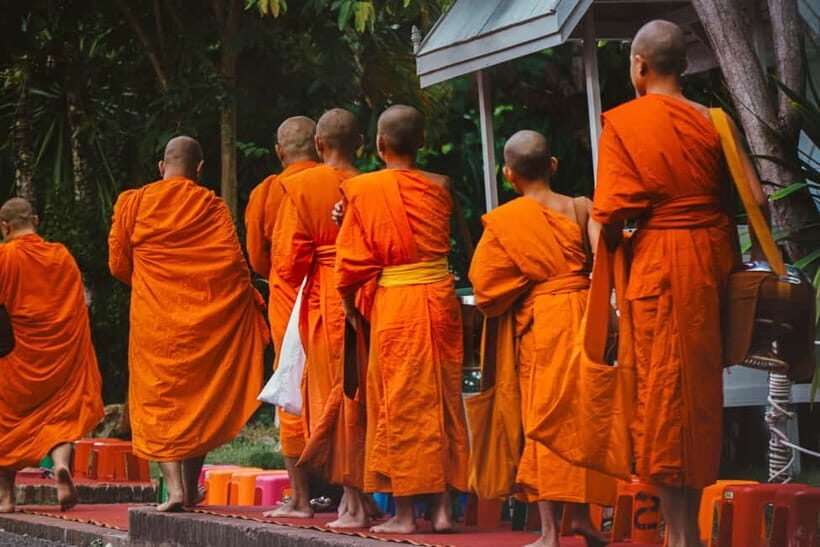
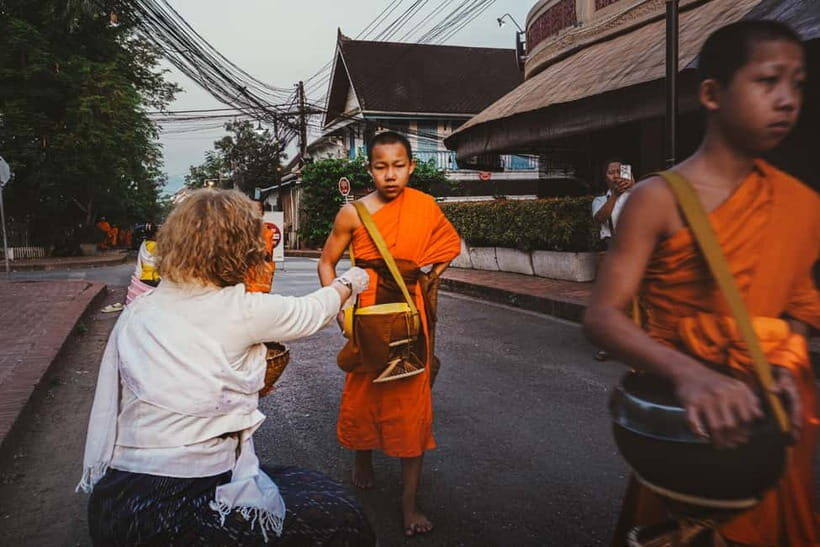
Luang Prabang does morning with purpose. You’ll be out early, watching saffron-robed monks move through the streets in silence while locals and visitors prepare offerings. The almsgiving ritual—Tak Bat—isn’t a performance. It’s a daily act tied to Buddhist practice, where food is offered to monks as part of their monastic routine.
What makes this experience special for me is the pacing. Because it’s a short window, you don’t get stuck in a long program that turns into sightseeing fatigue. You simply show up, follow the rules, offer what’s provided, and take in the stillness. That’s also why the “morning” part matters: the ceremony feels different when the town is just waking up.
You can also read our reviews of more tours and experiences in Luang Prabang.

Meeting around L’Elephant and finding your spot
The starting point is L’Elephant. From there, you’ll go to the area where the almsgiving is happening. One thing to know: you’re responsible for getting yourself to the meeting point and then to the ceremony area—transfer to the spot isn’t included.
That can be the difference between a smooth morning and a stressful one. If you’re the type who likes breathing room (me), give yourself extra time to get there, get oriented, and meet your guide before the monks arrive. A few minutes of uncertainty early can feel like a lot when everything happens in real time.
A practical bonus: this experience is designed to be organized and guided, and some groups are positioned so the moment feels more spiritual and less like a street show. You might find yourself on a quieter side-road spot rather than the busiest viewing points, which makes it easier to concentrate on what you’re doing.
The offering: sticky rice, banana, and doing it the right way
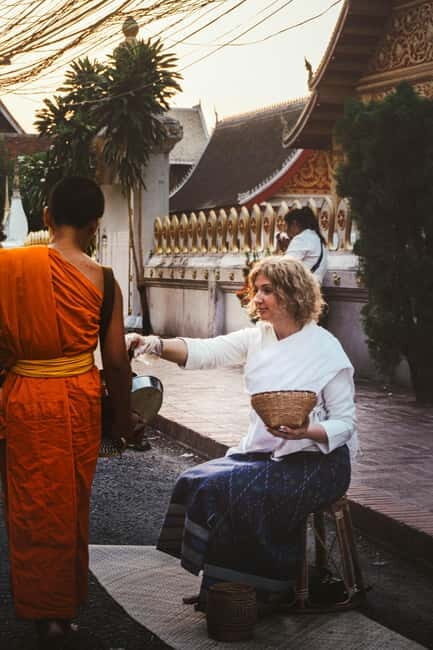
This is where you go from “spectator” to “participant,” and it’s not complicated—just respectful.
You’ll receive a traditional Lao offering set, typically including:
- Sticky rice
- Banana
- Snacks (the rest is part of the provided bundle)
You’ll also be given a local-style scarf to wear during the ceremony. The scarf isn’t just decoration. It helps you fit in visually with the modest, respectful expectations of the ritual.
When it’s time to offer, the big rule is simple:
- Do not touch the monks or their alms bowls.
Keep your hands and body controlled. You’re offering food, not handling people or equipment. Your guide will set the tone for what’s appropriate, and you’ll get coaching on respectful behavior and traditions.
Also note: there’s no point showing up with a complicated plan for what to bring. The set is provided. Your job is to bring your attention and follow instructions.
Wearing modest clothes and keeping the moment calm
This experience is one of those cases where rules actually protect the atmosphere. You’ll want to dress modestly, with shoulders and knees covered. Don’t wait until the morning to figure this out—Luang Prabang mornings can be cool, and you’ll appreciate clothing that stays comfortable while you stand and observe.
Two etiquette points you should take seriously:
- No flash photography
- Don’t touch monks or alms bowls
No flash matters more than you might think. It keeps the ceremony quiet, and it reduces the distraction for everyone involved—monks, locals, and other visitors trying to keep the morning sacred. If you want photos, use natural light and keep your camera ready, but gentle.
What your guide actually does for you
A good guide is the difference between seeing something interesting and understanding something meaningful. Here, you get a live tour guide in English and Thai.
In particular, one guide you may encounter—Johny—has a background as a monk for about 10 years. That kind of experience can translate into clear, grounded explanations of Buddhist practice, without turning the ceremony into a lecture. Even if you don’t have that exact guide, the intention is the same: you’re guided through respectful behavior and given context so you’re not just guessing what you’re looking at.
You’ll also learn what not to do. That might sound basic, but in real life it helps you avoid awkward mistakes—like standing too close, moving at the wrong moment, or forgetting how people expect you to handle the offering.
And yes, photos are part of the experience too. Some guides help you get good shots of yourself while you’re offering, which can be a relief if you came without a travel partner.



Timing: a short 1-hour window that still feels complete
The duration is 1 hour, which is ideal if you want a real cultural experience without burning half a day. In that time, you can cover the ceremony itself and still have energy left afterward.
Because it’s short, plan your expectations like this:
- You’ll focus most of the time on the ceremony and offering moment.
- Then you’ll move on to a nearby temple for context.
- After the program ends, you’ll be ready to explore Luang Prabang’s UNESCO streets again, not exhausted from a long tour.
The value of a tight schedule is that it keeps you present. Almsgiving is fast-moving. You don’t want to be stuck thinking about lunch while monks are passing by silently.
The temple visit after Tak Bat: putting meaning on what you saw
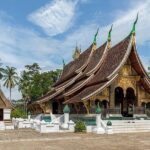
After the ceremony, you’ll visit a nearby temple. This step is more than a box-check. It helps you connect the ritual to the broader Buddhist practices you’re seeing in the town.
Even if you’re not deeply religious, the temple stop can answer the questions that naturally pop up during the street scene, like:
- Why monks do this daily
- What it means for laypeople to offer food
- How the monastic life fits into the community
Think of it as your “now I get it” moment. The ceremony gives you the feeling; the temple helps you understand what’s behind the routine.
Photos, silence, and how to behave like a respectful guest
If you like taking pictures, keep these practical rules in mind before you start aiming your lens:
- Keep flash turned off
- Don’t get in people’s way
- Keep your body calm and movement minimal during the offering moment
- Remember the no-touch rule: monks and bowls are off limits
Also, plan to use your camera without constantly checking settings mid-ceremony. You’ll want your hands free when it’s time to hold your offering set and scarf.
One more tip: wear comfortable shoes. You’ll likely be standing and watching at street level while monks move through. The ceremony is serene, but your body needs to feel steady too.
Price and value: why $25 can make sense here
The price is $25 per person for about 1 hour. That’s not “budget” pricing, but it also isn’t inflated for what you receive.
Here’s the value math that matters:
- You get a traditional offering set included (sticky rice, banana, snacks)
- You get a local-style scarf
- You get guidance on respectful behavior and what to do
- You get a temple visit afterward
- You have a live guide available in English and Thai
What’s not included is transportation to the spot, so you’ll need to budget time and money for getting there yourself. But even with that, the included offering and the structure of a guide-run morning can still feel like good value—especially if you want to participate correctly without hunting down the right instructions on your own.
Who this is best for (and who should skip it)
This experience fits best if you:
- Want an early-morning cultural ritual with real human meaning
- Like guided interpretation that makes what you see understandable
- Prefer short, focused activities with a built-in structure
It’s not suitable for:
- Babies under 1 year
- People with altitude sickness (the listing flags it as not suitable)
It also isn’t ideal if you’re looking for a long walking tour with lots of stops. This is about one sacred moment plus a temple context—keep it simple and it will land better.
If you’re traveling with kids, stick to ages where they can handle early mornings and follow etiquette. This ceremony isn’t the kind of event where you want constant distractions.
Should you book Tak Bat in Luang Prabang?
I’d book this if you want a respectful way to experience a daily ritual and not just take photos from the sidelines. The combination of participation (with a provided offering set) and the follow-up temple visit makes it more than a quick spectacle.
Skip it (or at least reconsider) if you don’t want to handle your own timing and getting to the meeting point and ceremony area, since transfer isn’t included and it’s an early, time-sensitive event.
FAQ
How long is the Luang Prabang almsgiving ceremony?
It lasts about 1 hour.
What’s included in the offering set?
You’ll receive a traditional Lao offering set, including sticky rice, banana, and snacks. A local-style scarf is also included.
Do I need to arrange transportation to the ceremony spot?
Yes. Transfer to the spot isn’t included, so you’ll need your own way to get there.
Are flash photos allowed?
No. Flash photography isn’t allowed.
What should I wear?
Dress modestly, with shoulders and knees covered.
What languages is the live guide available in?
The guide is available in English and Thai. The experience is also listed as wheelchair accessible.