REVIEW · LUANG PRABANG
Luang Prabang: Evening Cooking Class & Local Baci Ceremony
Book on GetYourGuide →Operated by Wander Laos Tour Co.,Ltd · Bookable on GetYourGuide
A dinner, a blessing, and live music. This Luang Prabang evening ties a Baci ceremony to a hands-on cooking class, with a market stop and rice-field views.
I especially like the feeling that you’re dining with a family, not joining a scripted show. I also love the practical ingredient lesson, from herbs at the market to the flavors that show up in your own five-dish Lao meal.
One thing to consider: the ceremony and home setting expect basic respect and mobility, and this activity is not suitable for pregnant women or wheelchair users.
In This Review
- Key things I’d put on your radar
- From 4:00 PM pickup to a quiet start in rice-country
- Market stop: herbs, seasonings, and the logic of Lao flavors
- Cooking your own Lao dinner: five dishes in a real charcoal kitchen
- Dinner the Lao way: you’ll eat what you cooked
- Traditional folk music after dinner: Hmong costume, bamboo vibes, and rice-field views
- The Baci ceremony: blessings you can witness up close
- Who leads the evening and what makes it feel personal
- Price and value: what $51 really buys in 4 hours
- Practical tips so the evening goes smoothly
- Should you book it? My straight answer
- FAQ
- What is the duration of the evening cooking class and Baci ceremony?
- What’s included in the $51 price?
- Are alcoholic drinks included?
- Where does it start and end?
- What should I wear for the ceremony?
- Is this activity suitable for everyone?
Key things I’d put on your radar
- Small group dinner limited to 6 people, so you get real attention in the kitchen
- Market-to-meal flow that teaches what you’re cooking and why it matters
- Hands-on Lao cooking of 5 typical dishes using local ingredients
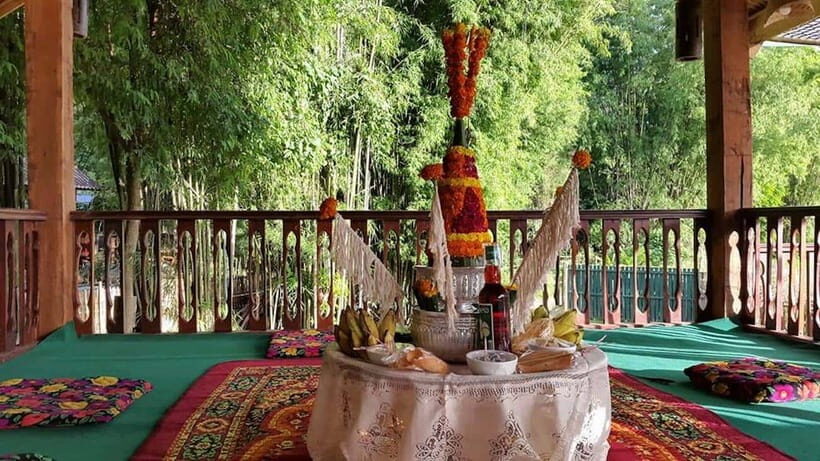
- Baci ceremony with a local family featuring blessings connected to life events
- Evening music performance by local musicians (often in traditional Hmong costume)
- A pavilion-style setting modeled on a traditional Lao house overlooking rice fields
From 4:00 PM pickup to a quiet start in rice-country
Your evening begins at 4:00 PM, when a driver meets you at your Luang Prabang hotel lobby. After that first transfer, you head straight to the market, so you don’t just learn Lao food by theory. You learn it by seeing the ingredients in real daily use.
I like the timing. Early evening in Luang Prabang is when the light turns soft and the rice paddies around town start looking their best. You’ll move from street life to a more private, family-style setting without the usual rush.
This is also a small-group format. With a limit of 6 participants, you’re not stuck watching from the sidelines while someone else cooks. You should expect help, but also hands-on steps.
You can also read our reviews of more cooking classes in Luang Prabang

Market stop: herbs, seasonings, and the logic of Lao flavors

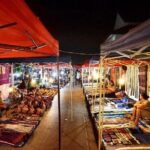
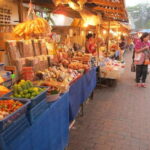
The market visit is more than a quick photo stop. You’ll learn about fresh produce and herbs that locals rely on in everyday cooking. This is where the whole class starts to make sense, because Lao meals are built on balances like sour, spicy, salty, and fresh herb notes.
You’ll have time to ask questions, too. Many people walk away remembering specific ingredients and what they do in a dish, not just what they looked like. If you’re food-minded, this part alone helps you understand why Lao cuisine tastes the way it does.
Practical note: wear comfortable shoes. Markets can mean uneven ground, standing, and slow walking while you look at everything.
Cooking your own Lao dinner: five dishes in a real charcoal kitchen
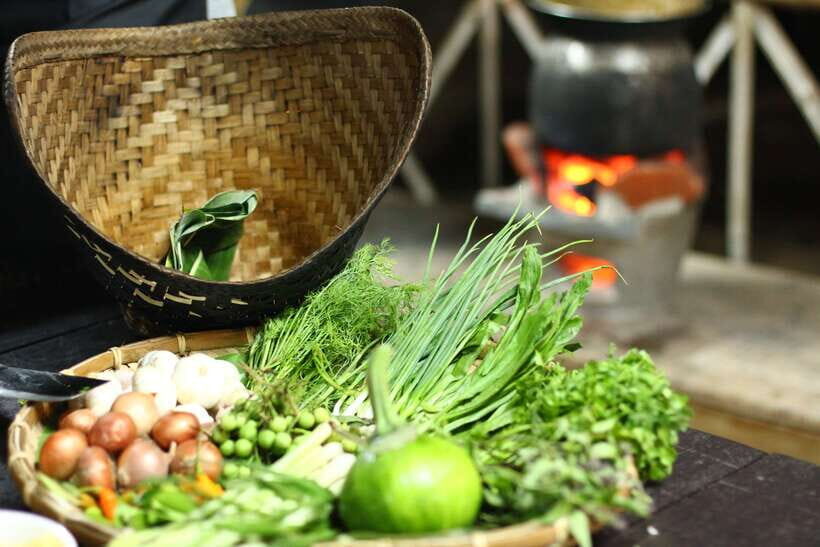
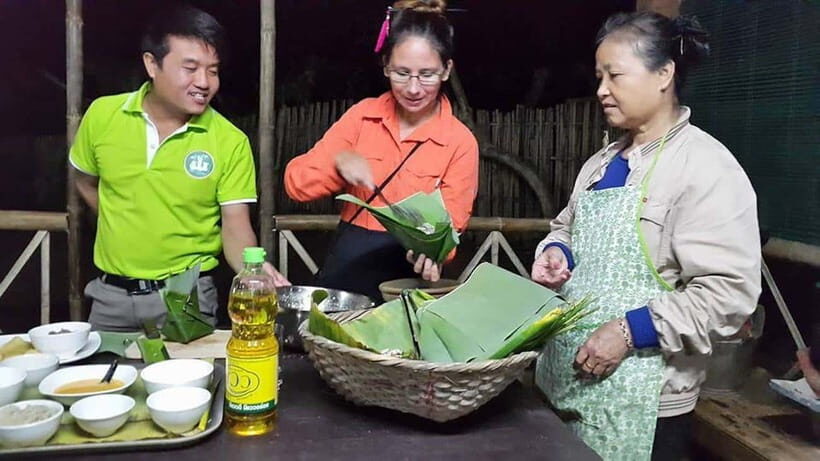
Next comes the heart of the evening: cooking a traditional Lao dinner. The plan centers on making 5 typical dishes using the ingredients you picked up (and learned about) at the market. You’re not just assembling a plate. You’re working through techniques with your host and family.
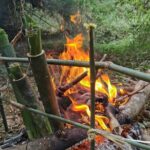
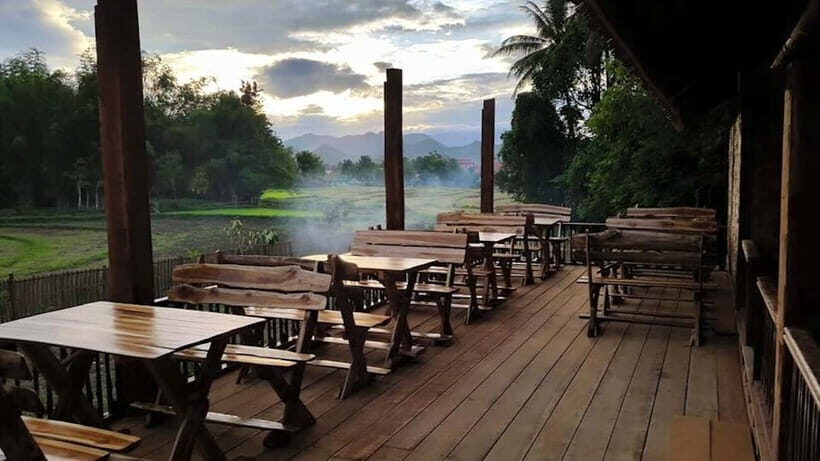
The cooking setup is rustic and home-style, often described as an open-air pavilion modeled on a traditional Lao house. Some kitchens use charcoal methods, and that matters, because it changes how aromas come off pans and how flavors build.
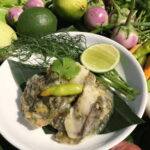
From the dish variety people have described, you might cook things like sticky rice, a soup, pork or fish dishes, and dips such as tomato or eggplant. Different evenings can vary based on season and what’s available, but the goal stays the same: you leave with a meal that feels like an actual home dinner, not a performance menu.
I also like that the class builds skills, not just recipes. Even if you can’t recreate everything at home, you’ll probably understand the role of each ingredient and how Lao meals get their character.
Dinner the Lao way: you’ll eat what you cooked
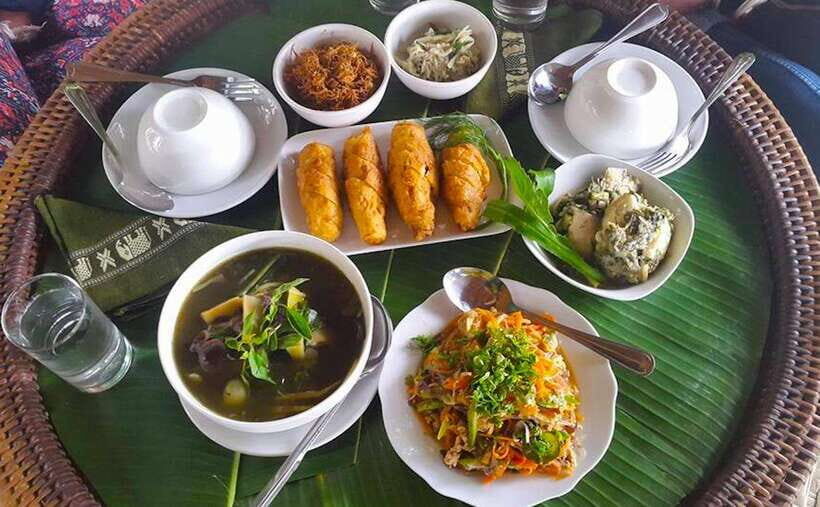
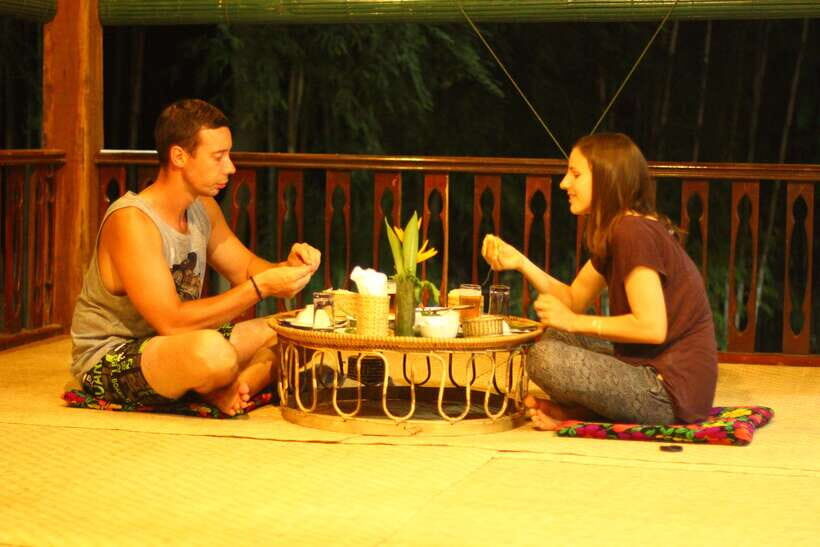
After the cooking, you eat together in traditional Lao style. This isn’t formal dining with plated portions and cutlery etiquette. Expect a more communal, relaxed meal format, where the point is eating well and sharing a table.
And yes, it’s your food. That sounds obvious, but it changes how you taste. You notice textures more. You remember where a herb hit the pan. You understand what to adjust next time when something needs more sourness, more heat, or a pinch more salt.
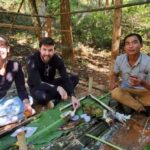
If you’re the type who normally wants a chef to do the hard work, this part will be your friendly reality check. It’s still supported. You’ll be guided by the host and family cooks, often including the host’s wife and other family members involved in the process.
Traditional folk music after dinner: Hmong costume, bamboo vibes, and rice-field views
After dinner, you shift into the evening’s cultural program. You’ll enjoy traditional folk singing and music performed by locals, and some shows include performers in traditional Hmong costume.
One detail I like: the setting. Several descriptions mention the view over rice fields surrounding the building, which makes the music feel like part of the landscape, not an indoor entertainment filler. Even when you’re sitting still, you’re still doing something pleasant with your senses.
There’s also mention of an instrument performance, and in many cases it’s tied to a Lao tradition using a reed instrument people associate with the Khene. On some evenings, you may even get a moment to try playing the instrument, which is a great way to turn passive listening into a small hands-on memory.
You can also read our reviews of more evening experiences in Luang Prabang



The Baci ceremony: blessings you can witness up close
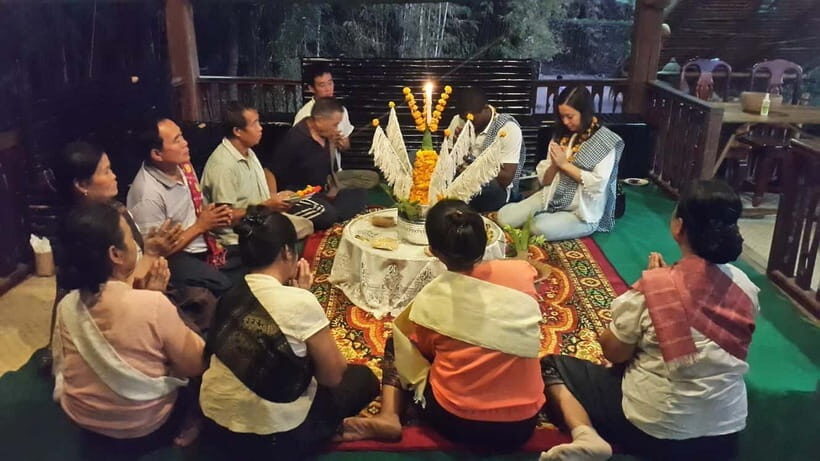
The Baci ceremony is the most distinctive part of the evening. A Baci is a Lao custom performed to mark special moments, such as marriage, homecoming, births, someone recovering from illness, or monks entering a temple. In other words, it’s tied to life passages.
What you’ll see is the kind of ceremony that locals understand without needing a script. You’ll also have context explained beforehand, so you’re not sitting there guessing what each part means. Many people describe feeling that the ceremony was intimate and meaningful, especially because it’s hosted by a local family and often involves local elders.
Expect the experience to feel participatory in a respectful way. Some descriptions include singing during the ceremony, and a number of people mention receiving ceremonial blessings like string bracelets for good luck. These details vary, but the intention is consistent: welcoming you into a moment the family treats as important.
Dress and body posture matter. You should wear clothes that cover your knees and shoulders. This isn’t just “polite,” it helps you blend in with the setting and the expectations for a home ceremony. If you have limited flexibility, the ceremony seating and posture can be uncomfortable. And again, it’s not suitable for people with mobility impairments or wheelchair users.
Who leads the evening and what makes it feel personal
This experience is built around an English-speaking host and a family who cooks and performs in their own home setting. Names come up often, including Si and Somsay, with other family members and helpers like Chian and Phong showing up in different parts of the evening.
What makes this work is not just friendliness. It’s the mix of translation and practical instruction. You’ll get ingredient explanations at the market, clear guidance while cooking, and ceremony context before the blessing begins. That flow is what turns it from a cultural encounter into something you can actually carry home.
Because it’s small group, you’re more likely to get answers to the questions you’re thinking. If you’re the kind of person who always wants to know what makes a sauce taste right, this evening should satisfy that urge.
Price and value: what $51 really buys in 4 hours

At $51 per person for about 4 hours, you’re paying for a tight bundle of experiences: hotel pickup and drop-off, a market visit, hands-on cooking of 5 dishes, a home-cooked dinner, a Baci ceremony, and a musical performance. You also get English support and a group size kept small.
The value is strongest if you want more than a generic cooking class. The market ingredient lesson and the ceremony context are what separate this from a cooking-only option. Also, the setting is home-style and family-run, which usually means less gloss and more heart.
The one cost note: alcoholic drinks are not included. If you drink, plan on paying for it separately if it’s available. If you don’t drink, that’s not a problem because the dinner and cultural program are the main event.
Also note what’s not allowed: you can’t bring your own food and drinks into the activity. That’s normal, but it’s worth knowing so you don’t show up thinking you’ll snack your way through.
Practical tips so the evening goes smoothly
Here’s what I’d do to get the best version of this experience.
- Wear comfortable clothes and covered knees and shoulders for the Baci ceremony
- Bring comfortable shoes for the market and walking between spots
- If you’re sensitive to sitting for a while, consider that this ceremony may involve posture expectations
- Come hungry. You’re cooking and eating a full dinner, not just sampling bites
- Expect charcoal-style cooking and lots of real-life kitchen activity, so keep your expectations flexible
If you’re vegetarian or have dietary needs, the data suggests the cooking class may be suitable for vegetarians in some cases, but it doesn’t guarantee every dish. If that matters to you, you’ll want to ask before you go.
Should you book it? My straight answer
Book this evening if you want a Luang Prabang experience that feels like it belongs to the community, not just the tourist calendar. The strongest reason is the combination: market learning, hands-on Lao cooking, and a Baci ceremony with local elders in a family setting.
Skip it if you need step-free accessibility, or if pregnancy or mobility issues make the ceremony setting difficult. Also, if you’re hoping for a rigid, restaurant-style menu where you choose everything in advance, this isn’t built like that. It’s built around local ingredients, family timing, and the flow of the evening.
If you’re curious about Lao food beyond pad thai comparisons, and you like culture that’s experienced in real daily rhythms, this is one of the best ways to spend your daylight.
FAQ
What is the duration of the evening cooking class and Baci ceremony?
The experience lasts about 4 hours.
What’s included in the $51 price?
It includes hotel pickup and drop-off in Luang Prabang city, an English-speaking host, the cooking class, a home-cooked dinner, the Baci ceremony, and an instrument performance.
Are alcoholic drinks included?
No. Alcoholic drinks are not included.
Where does it start and end?
It starts with hotel pickup from your Luang Prabang hotel lobby and ends with a transfer back to your hotel.
What should I wear for the ceremony?
Wear clothes that cover your knees and shoulders, plus comfortable clothes for cooking. Comfortable shoes are also recommended.
Is this activity suitable for everyone?
It is family-friendly, but it’s not suitable for pregnant women or people with mobility impairments, including wheelchair users.