REVIEW · LUANG PRABANG
Luang Prabang: Bamboo Weaving Workshop & Cooking Class
Book on GetYourGuide →Operated by Wander Laos Tour Co.,Ltd · Bookable on GetYourGuide
Bamboo can be everything here. This half-day experience in Luang Prabang puts bamboo in the spotlight, from weaving a small mat to cooking with bamboo shoots, with local music woven in. You’ll get a clear, hands-on introduction to why bamboo shows up everywhere in Lao life, not just as a souvenir. Bamboo weaving and bamboo-shoot cooking are both the main event.
What I like most is how practical it feels: you’ll learn the real technique of cutting bamboo into strips and making an overlapping woven souvenir, then you’ll cook bamboo-based Lao dishes with guidance from the chef. The other big win is the setting and vibe, including a warm welcome and a relaxing break after class with food served in a bamboo tray. One drawback to plan around: the activity happens in a traditional bamboo house and it’s not suitable for people with mobility impairments, so if walking or standing is a challenge, this probably won’t be the right fit.
In This Review
- Key things to know before you go
- Bamboo matters more than you think in Luang Prabang
- Tuk-tuk pickup, bamboo-house timing, and the best session choice
- Walking into a traditional bamboo pavilion
- Weaving your souvenir mat: the technique you’ll actually use
- Bamboo weaving isn’t just craft, it’s Lao daily life
- Cooking bamboo shoots on real fire: what you’ll make and eat
- The music and bamboo instruments part that makes it feel local
- Cost and value: what $44 gets you in real terms
- Who should book this, and who should skip it
- Should you book the Bamboo Weaving Workshop and Cooking Class?
- FAQ
- Where does the experience take place?
- How long is the class?
- How much does it cost?
- Do I get hotel pickup and drop-off?
- What time does pickup happen?
- What activities are included?
- What food do you get?
- Is alcohol included?
- What should I bring?
- Is the experience offered in English?
- FAQ
- Is there a vegetarian option?
- What should I wear and expect for the setting?
- Who is the tour not suitable for?
- Are pets allowed?
- Can I bring my own food or drinks?
- What dishes are cooked using bamboo?
- Is knife sharpening part of the workshop?
- Do I need to cancel ahead of time to get a refund?
Key things to know before you go
- Hotel pickup by tuk-tuk makes it easy to start and easy to return
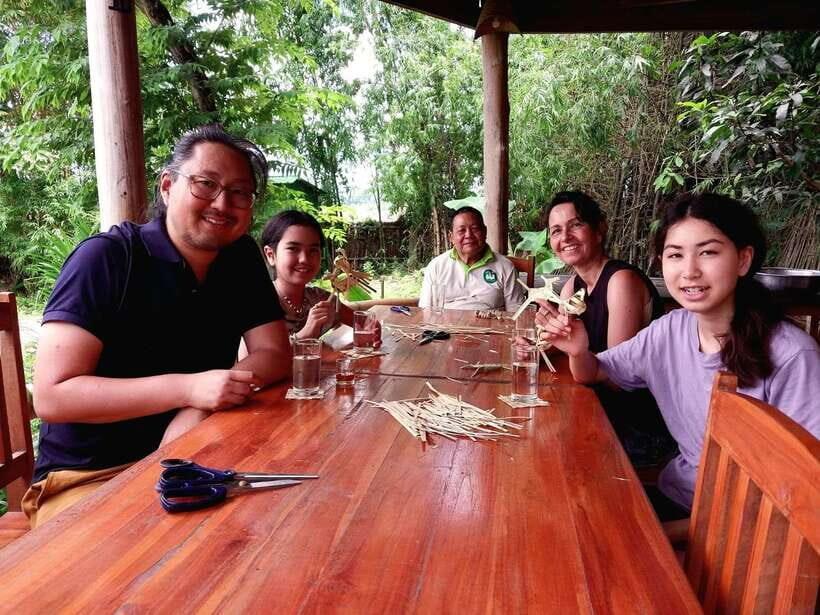
- You weave a souvenir mat using strips of bamboo, not just watch a demo
- Hands-on cooking focuses on bamboo shoots and Lao flavors, cooked with real fire
- Bamboo is the lesson: tools, daily life uses, and musical instruments all connect back to the plant
- Music and performance are part of the program, not an afterthought
- A bamboo-tray meal wraps up the class, morning lunch or evening dinner depending on your session
Bamboo matters more than you think in Luang Prabang
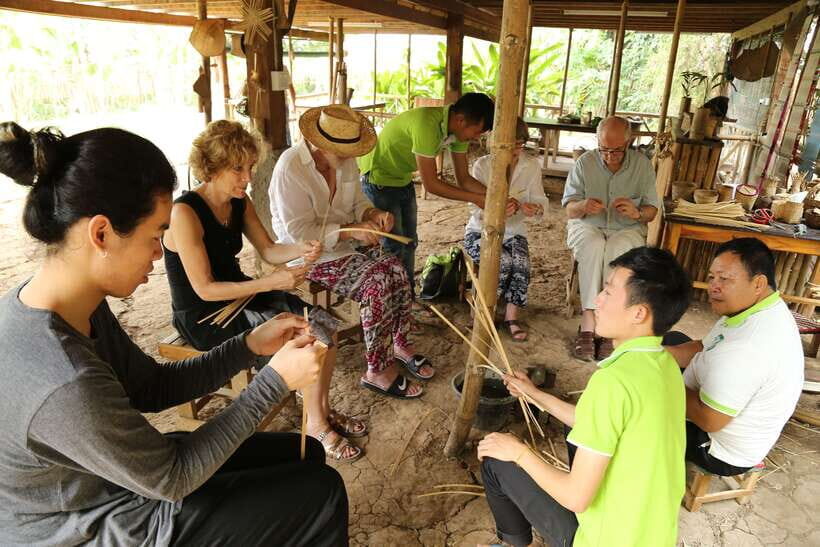
When you visit Luang Prabang, you can fill your days with temples fast. This is different. You spend time with bamboo as a material and as a cultural idea. Bamboo isn’t treated like a craft trend. It’s framed like a household tool that Lao families have relied on for generations.
Before you start weaving or cooking, the guide walks you through the plant’s importance in Lao life. Bamboo shows up in construction, household items, fishing tools, and even musical instruments. That context matters, because it makes the activities feel like a system, not random hands-on fun.
You also get a warm welcome and time to settle in. One common thread in the experience is that the hosts keep things friendly and approachable, so it feels like learning from people, not being herded through a checklist.
You can also read our reviews of more cooking classes in Luang Prabang

Tuk-tuk pickup, bamboo-house timing, and the best session choice
Your day starts with pickup from your hotel by tuk-tuk. Morning is around 8:30 AM, evening around 4:00 PM. The tour is designed as a half-day block, typically 4 to 5 hours, so you’re not losing a full day to transportation and waiting.
The first practical point: arrive on time. Pickup is scheduled, and the tour can be canceled with no refund if you’re more than 30 minutes late after the pickup time. That’s not meant to be annoying. It just reflects that the class runs on a tight rhythm once everyone arrives.
Now for the timing choice. Morning tends to be better for photos, since you’ll be working and moving around in a light, outdoor-friendly setting. Evening is a nice pick if you want the cooking portion to feel more like dinner preparation, since evening visits give you a chance to prepare your own meal.
Plan your footwear too. You’ll be moving around the bamboo house and working at your station, so comfortable shoes really do make the experience smoother.
Walking into a traditional bamboo pavilion
Once you’re picked up, you head out to a rustic pavilion built in the style of a traditional Lao house. It sits on the outskirts of Luang Prabang in a setting that people describe as lush and calm, with lots of greenery around.
That matters more than you might think. Bamboo weaving and cooking are both hands-on, and the whole experience lands better when you’re not squeezed into a sterile classroom. Here you’re in an open-air, natural-feeling space that helps the class slow down. You can pay attention to the details, like how bamboo strips behave when you cut them or how the cooking is timed on real heat.
There’s also a cultural rhythm to it. The guide introduces bamboo uses first, then moves into weaving, then returns to the kitchen. You’re not just making an item. You’re learning the logic behind why bamboo is so useful.
Weaving your souvenir mat: the technique you’ll actually use
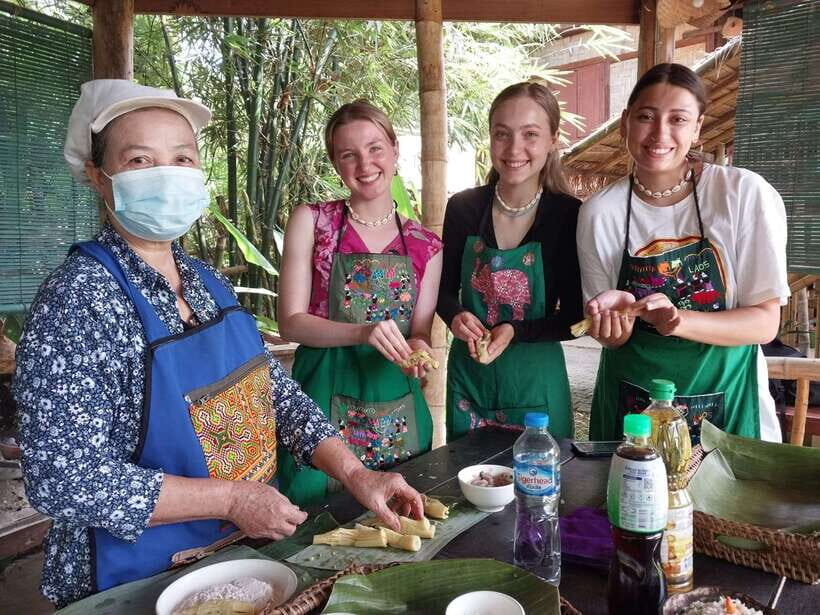
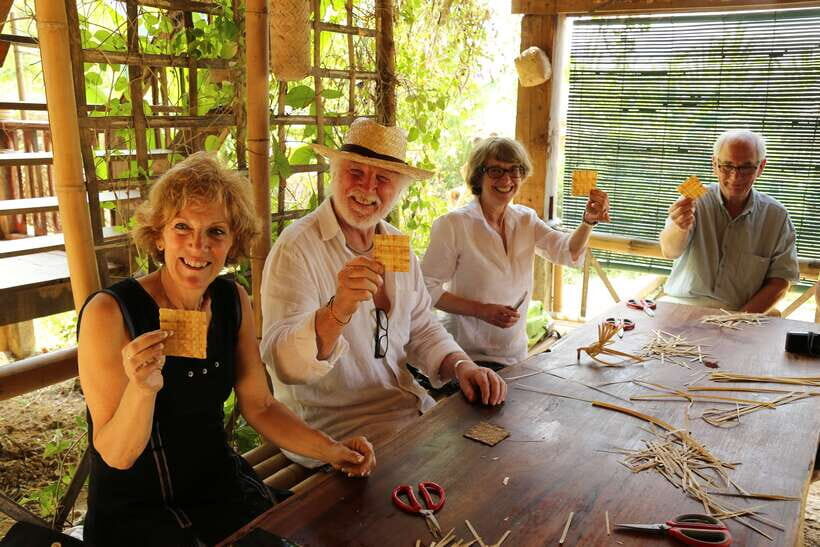
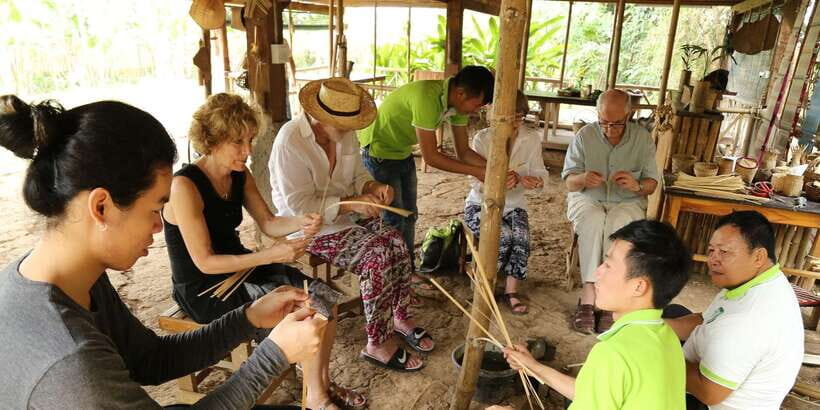
The workshop part is the craft core. You’ll start learning about bamboo strips and how to work them correctly. The instructor shows you how to sharpen knives and how to cut bamboo into usable strips, then you’ll weave your own souvenir mat.
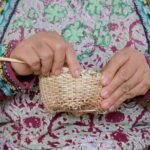
This is the portion I’d highlight if you want something tactile and satisfying. It’s not complicated in the sense of being technical art school. But it is real weaving, with a step-by-step rhythm. You’ll learn the overlapping weave method to make a small mat, and you’ll keep returning to the pattern until you finish with something you can take home.
One detail that makes the class feel more authentic is that the teaching includes practical tool handling. Knife sharpening is part of the process, not just a safety lecture. You’ll understand that weaving isn’t only the final pattern. It starts with making clean strips.
If you get even a little frustrated, don’t worry. The instructors are patient and they help you correct mistakes as you go. The goal is that you leave with a mat that feels like your work, not a souvenir produced for you.
Bamboo weaving isn’t just craft, it’s Lao daily life
Here’s what I find smart about the way they teach it: they connect what you’re doing back to household life. The bamboo intro doesn’t sit off to the side like trivia. It keeps reappearing as you learn.
The guide explains how bamboo becomes multiple household tools. That includes practical items like fishing tools, plus musical instruments. It’s a neat shift in your perspective. Instead of thinking bamboo equals eco-friendly decor, you start seeing it as a functional material family.
You also learn why bamboo is so common in Lao building and everyday use. The message is simple: bamboo grows, bamboo works, bamboo fits the way people live. By the time you finish your mat, you’re not just holding a craft item. You have a new way to look at daily objects in Laos.
This is where the experience earns its place, especially if you’ve been temple-heavy. You come away with a clearer sense of how people live and work, using what’s around them.
A few more Luang Prabang tours and experiences worth a look


Cooking bamboo shoots on real fire: what you’ll make and eat
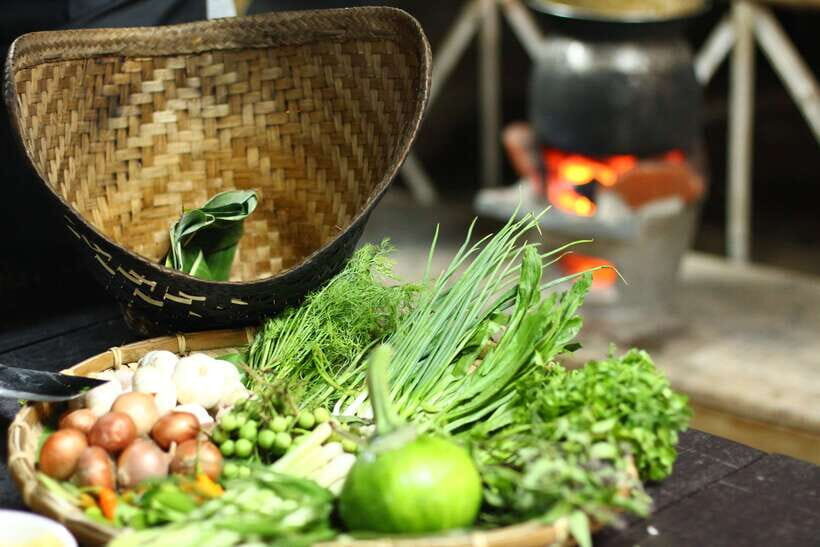
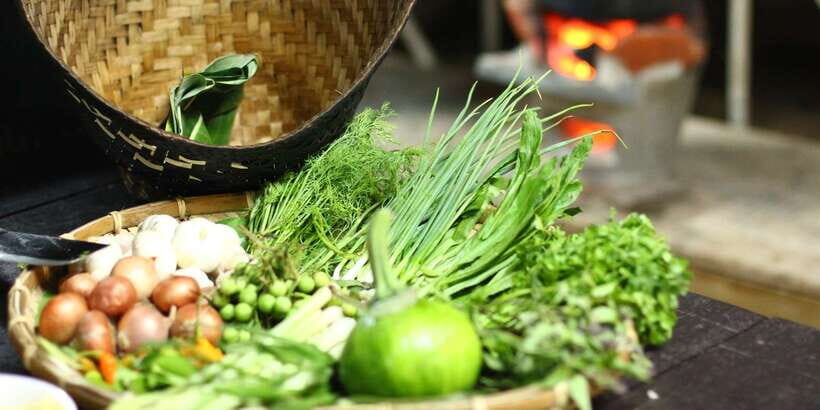
After weaving, you shift from hands to appetite. The cooking portion is hands-on, and it uses bamboo shoots as a key ingredient. This is not a hands-off tasting tour. You assist a chef in preparing dishes and you learn what ingredients are doing in Lao cooking.
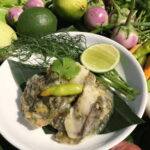
Common dishes you may see include bamboo shoot soup, bamboo shoot steamed in banana leaf, and bamboo shoot dip. Some sessions also include bamboo basket steaming for rice, and stuffed bamboo shoots cooked with a filling. Menus can vary, but bamboo shoots stay at the center.
A big practical plus is the meal format. You’ll have lunch or dinner depending on your session booked, and the food is served in a traditional bamboo tray. That makes the meal feel connected to the rest of the class, not like a random buffet stop.
Food style is Lao with choices. The dishes can include meat and fish, and vegetarian options are available in at least some variations of the program. So if you eat vegetarian, it’s worth mentioning your preference when you book or at pickup, since the exact menu can depend on the cooking plan.
One more small but important tip: don’t show up hungry. You’ll be tasting and cooking, and then you’ll eat what you helped prepare. It’s a full half-day experience, not a quick snack.
The music and bamboo instruments part that makes it feel local
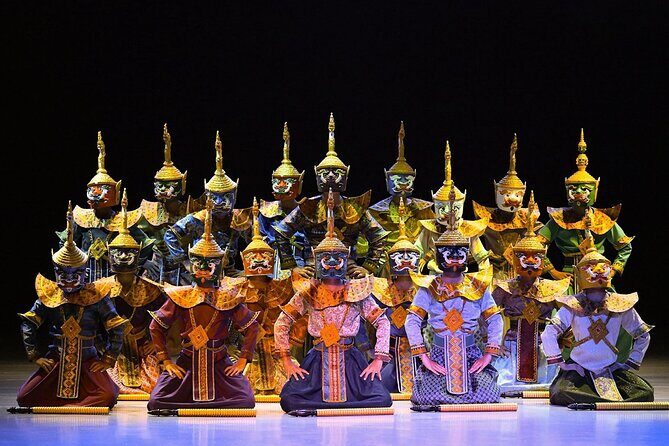
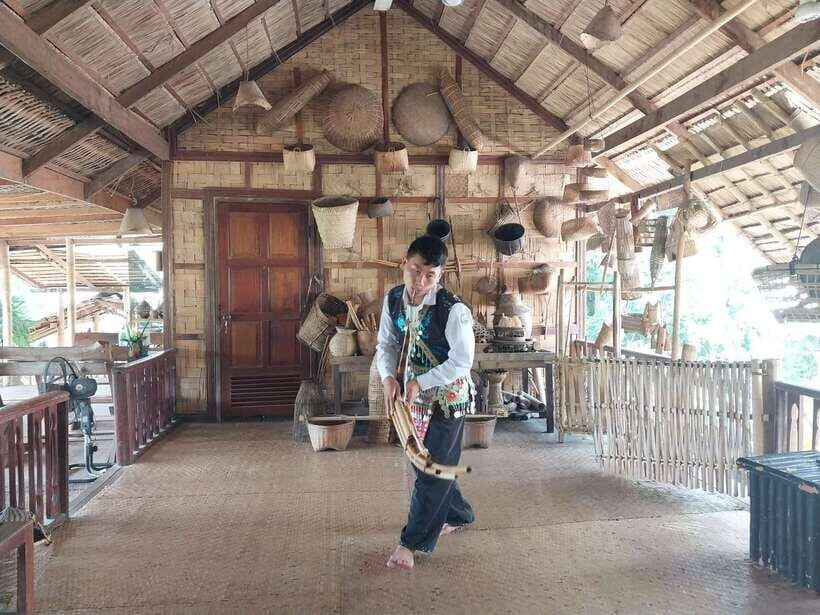
This is where the experience stretches beyond cooking and craft. Once the work is done, you’ll see bamboo musical instruments performed by local Lao musicians.
Some programs also add a performance element where you can participate, like a bamboo dance moment. In at least one described version, a Hmong artist was part of the music and performance portion, and visitors were invited to try the activity themselves.
Even if you’re not a performance person, this segment helps you tie bamboo to culture in a way you can’t get from a cookbook. Bamboo is a material for tools, food, and music. It’s all the same plant showing up in different forms.
If you’re worried the music will be short and scripted, focus on the tone described by previous guests: it’s playful and welcoming, not stiff. That matches the rest of the day.
Cost and value: what $44 gets you in real terms
At $44 per person for 4 to 5 hours, you’re paying for more than an activity. You’re paying for hotel pickup and drop-off, an English-speaking instructor, and two guided workshops: bamboo weaving plus a cooking class. You also get a meal served in a bamboo tray.
So the real value comes from the combination. Many tours in Luang Prabang are either craft OR food. Here you get both, plus cultural context about bamboo as a living part of Lao life. If you like interactive classes, this price can feel fair.
If you’re looking only for a quick photo stop or a passive show, the value might feel less obvious. This is active by design. You’ll cut, weave, cook, and eat. That’s why it tends to work best for people who enjoy doing, not just watching.
One more value point: the hosts run it with a strong local feel. People highlight that it’s run by Laotians and that the team is welcoming. That’s not a marketing claim; it changes the day. You spend less time feeling like a visitor and more time feeling like a temporary student.
Who should book this, and who should skip it
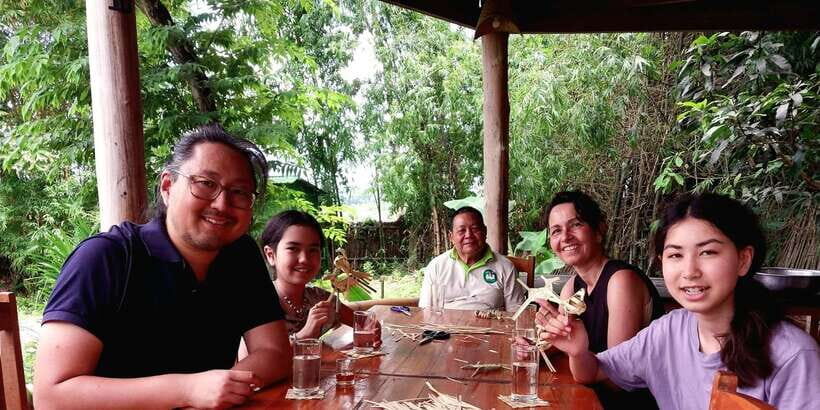
This is a strong match if you want a different day outside the temple circuit. It also fits well if you enjoy food you can explain afterward. Cooking bamboo shoots teaches you specific tastes and techniques, and weaving teaches you a step-by-step craft you can replicate later.
I’d also recommend it if you like meeting people and asking questions. The guide time isn’t just for talking at you. You get time for explanations, and the process stays interactive.
Skip it if mobility is a concern. The experience isn’t suitable for people with mobility impairments or wheelchair users, and it’s also not suitable for pregnant women. The traditional bamboo-house setting and hands-on work mean you’ll need to be comfortable standing and moving.
If you don’t like spicy or strong flavors, tell the instructor. The tour info doesn’t spell out spice levels, but since you’re cooking with a chef and making dishes yourself, you’ll have more chance to communicate than in a fixed tasting format.
Should you book the Bamboo Weaving Workshop and Cooking Class?
Yes, if you want a half-day that’s both practical and cultural. This is one of those Luang Prabang experiences where you leave with a souvenir that actually connects to a lesson, plus a meal that tastes like the place you’re visiting.
Book it if:
- You want hands-on weaving plus real cooking in one session
- You’re curious about bamboo as a core Lao material, not just a craft theme
- You’d rather learn from a small group setting than do another crowded city activity
Don’t book it if:
- You need an accessible experience for limited mobility
- You want something fully passive with no active crafting or cooking
If you’re on the fence, go with the session that matches your energy. Morning is best for photos and a smooth start. Evening can feel more like dinner prep. Either way, you’ll come away understanding bamboo in Lao life far beyond what a quick souvenir shop can teach.
FAQ
Where does the experience take place?
It takes place in Luang Prabang, Laos, at a rustic pavilion modeled on a traditional Lao house on the outskirts of Luang Prabang.
How long is the class?
The duration is about 4 to 5 hours.
How much does it cost?
It costs $44 per person.
Do I get hotel pickup and drop-off?
Yes. Pickup and drop-off from your hotel in Luang Prabang are included.
What time does pickup happen?
Morning pickup is around 8:30 AM, and evening pickup is around 4:00 PM.
What activities are included?
You’ll do a bamboo weaving workshop where you weave a souvenir mat, and a traditional cooking class using bamboo shoots. You’ll also enjoy a bamboo instrument performance.
What food do you get?
Lunch or dinner is included, served in a traditional bamboo tray, depending on whether you book the morning or evening session.
Is alcohol included?
No. Alcoholic drinks are not included.
What should I bring?
Bring comfortable shoes and comfortable clothes.
Is the experience offered in English?
Yes. An English-speaking instructor is included.
FAQ
Is there a vegetarian option?
Vegetarian options were available in at least some versions of the cooking class, but the exact menu can vary. Let the team know about your preference when you arrive.
What should I wear and expect for the setting?
The tour happens in a traditional bamboo house. Wear comfortable clothing and shoes since you’ll be active during weaving and cooking.
Who is the tour not suitable for?
It’s not suitable for pregnant women or people with mobility impairments or wheelchair users.
Are pets allowed?
No, pets are not allowed.
Can I bring my own food or drinks?
No. Food and drinks are not allowed.
What dishes are cooked using bamboo?
Common bamboo-focused dishes include bamboo shoot soup, bamboo shoot steamed in banana leaf, and bamboo shoot dip.
Is knife sharpening part of the workshop?
Yes. You’ll learn how to sharpen knives as part of the bamboo weaving process, along with cutting bamboo into strips.
Do I need to cancel ahead of time to get a refund?
Free cancellation is available up to 24 hours in advance for a full refund.