REVIEW · LUANG PRABANG
Luang Prabang: Cooking Class at the Former Royal Palace
Book on GetYourGuide →Operated by Victoria Xiengthong Palace Hotel · Bookable on GetYourGuide
Cooking Lao food feels like time travel. This Luang Prabang class pairs a morning market run with an English-speaking chef and a hands-on kitchen session at the former royal palace grounds, ending with lunch overlooking the Mekong. It’s one of those days where you learn how flavors are built, not just what to order.
What I like most is the chance to shop with cooks who explain ingredients as you go, including local herbs and spices you may not recognize. I also like that your lunch is not generic: you eat what you make at a calm riverside restaurant setting.
One consideration: you should plan to stand for extended periods, and there can be stretches where the team is prepping before you get full hands-on time.
In This Review
- Key things I think you’ll remember
- Why this Luang Prabang cooking class feels different than a food tour
- The former royal palace start: what happens before the kitchen work
- Market morning with a chef: how to choose Lao ingredients like a local
- The time gap before cooking: why it can feel long and how to use it
- Hands-on cooking at Alame Restaurant: how the class really runs
- The dishes you’re likely to cook (based on what prior menus included)
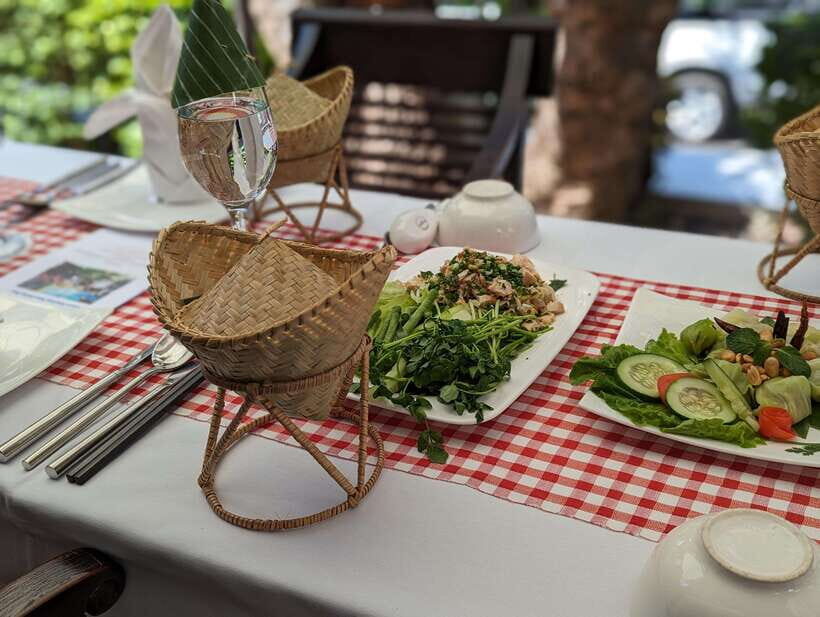
- Lunch on the terrace: turning lessons into flavor
- Vegetarian options
- Taking Lao flavors home: what you’ll really walk away with
- Price and value: is $45 worth it?
- Who should book and who should skip
- This is a great fit if you…
- You might want to think twice if you…
- Practical tips to make the most of your 4 hours
- Should you book the Luang Prabang Cooking Class at the Former Royal Palace?
- FAQ
- How long is the Luang Prabang cooking class?
- Where do I meet for the tour?
- What does the price include?
- Are drinks included?
- Will I cook, or is it mostly a demonstration?
- Can I get a vegetarian option?
- What language is the instructor?
- How large is the group?
- Is this suitable for wheelchair users?
- What should I bring, and is there anything I can’t bring?
- Is free cancellation available?
Key things I think you’ll remember
- Morning market shopping with an English-speaking chef so you understand what you’re buying and why
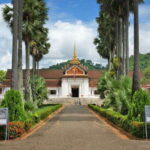
- Cooking in a heritage setting at Victoria Xiengthong Palace (Former Royal Palace)
- Mekong River views during the meal at Alame Restaurant’s terrace
- Laab and coconut dessert are common winners, based on menus used in past classes
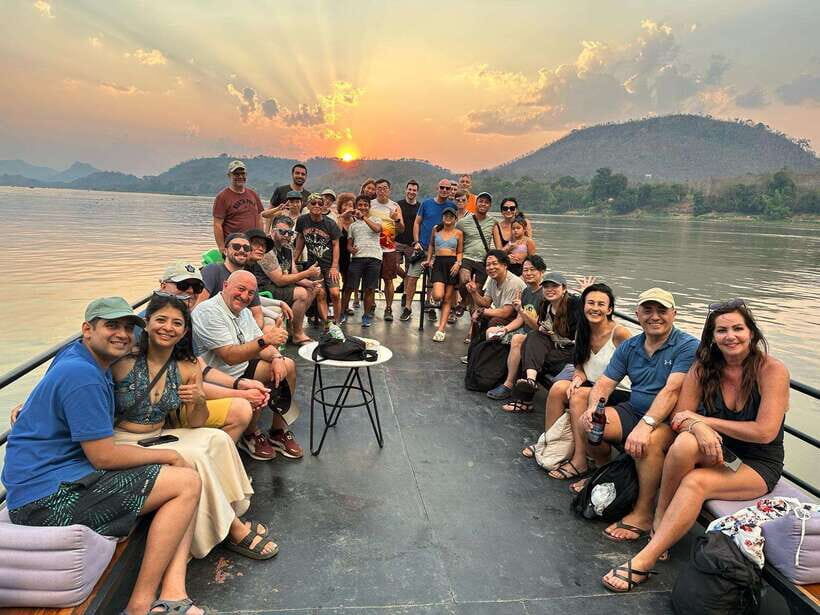
- Small group size (max 10) keeps things friendly and questions actually get answered
Why this Luang Prabang cooking class feels different than a food tour
A Luang Prabang cooking class should do more than teach recipes. This one starts by connecting the food to daily life: the market, the ingredients, the techniques, and the way Lao dishes balance sour, salty, herb-forward brightness, and gentle spice.
The setting matters. Cooking at the former royal palace grounds puts you in the right mood for the day. You’re not crammed into a modern demo kitchen. You’re in a heritage environment where the pace slows down, the instructors can teach calmly, and lunch feels like a reward instead of an afterthought.
You can also read our reviews of more cooking classes in Luang Prabang

The former royal palace start: what happens before the kitchen work
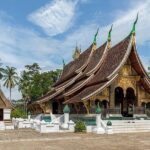
Your day begins at Victoria Xiengthong Palace near Wat Xiengthong, with the meeting point on Kounxoau Rd, Ban Phonehueng, Luang Prabang. From there, you’ll do about an hour of sightseeing, which helps you get your bearings before the work starts.
This hour is also a smart buffer. Cooking classes live and die by timing. By the time you’ve had a little orientation, you’re better prepared for the steady rhythm of market shopping, prep, and cooking steps later.
Here’s what you should mentally prepare for: you’ll be walking some, standing some, and moving between stops. If you’re the type who gets tired fast, wear supportive shoes. A hat is recommended, and it makes sense in Luang Prabang’s daytime sun.
Market morning with a chef: how to choose Lao ingredients like a local
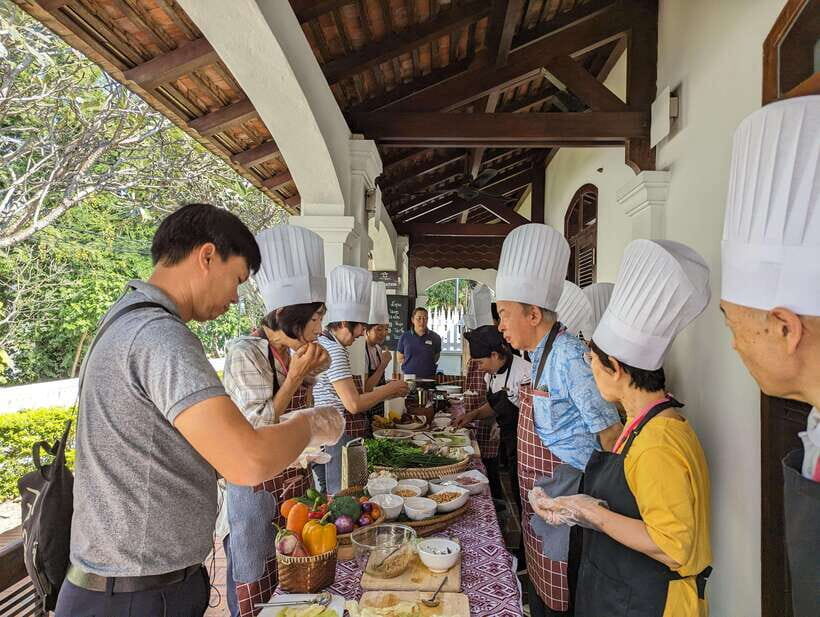
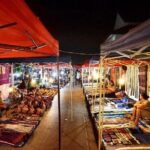
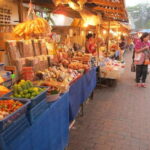
The heart of this experience is the morning market tour. You’ll go by bicycle or tuk tuk, then explore with your chef/instructor, picking ingredients and learning what each one does in Lao cooking.
The value here is not just seeing food for sale. It’s learning how to recognize ingredients by smell and use. In a market-led class, you find the items that shape dishes such as:
- fresh herbs for salads and laab
- sour components used for balanced flavor
- spice blends and aromatics that build a curry’s foundation
- fruits and snacks that show up alongside meals
Many class sessions include tasting small items during the market walk. One review even mentioned tasting fruit and juice during the morning. That’s a practical way to connect the ingredients to what they taste like, not just how they look.
If you’re a first-time Lao-cuisine visitor, this is where the mystery disappears. After the market, you stop thinking of Lao food as a list of unfamiliar dishes and start thinking of it as a system.
The time gap before cooking: why it can feel long and how to use it
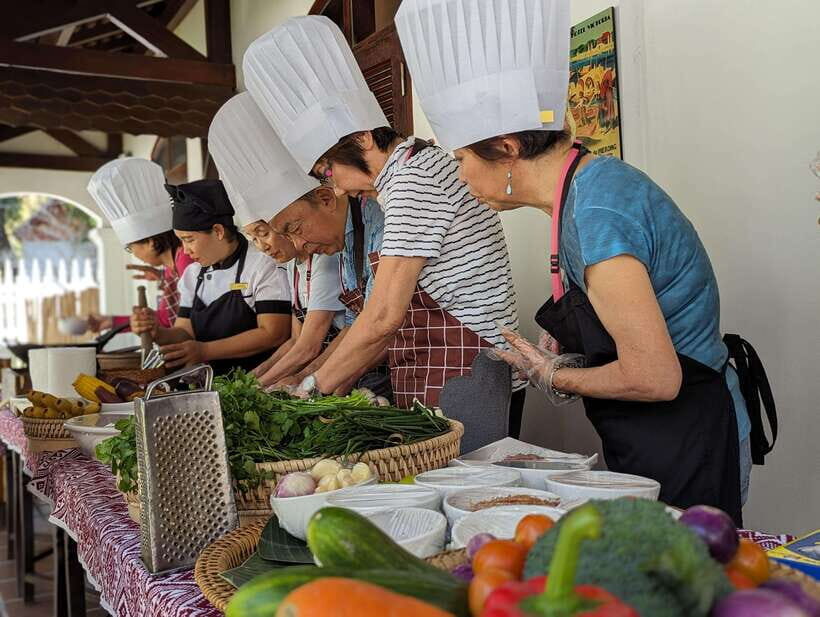
You may notice a pause between market time and full-on cooking. One group experience described a period where the chefs were prepping while participants had time to wander. Another mentioned going for coffee or visiting nearby areas while ingredients were readied.
Is that a problem? It depends on your expectations. If you came for constant chopping action from minute one, you might feel impatient. But if you treat it like a break, it becomes part of the charm of the day.
My practical advice: use this window for a slow reset. Stretch your legs, grab water, and take a breath. You’ll likely feel better once the kitchen phase starts, especially since your class may involve several dishes and hands-on steps.
Hands-on cooking at Alame Restaurant: how the class really runs
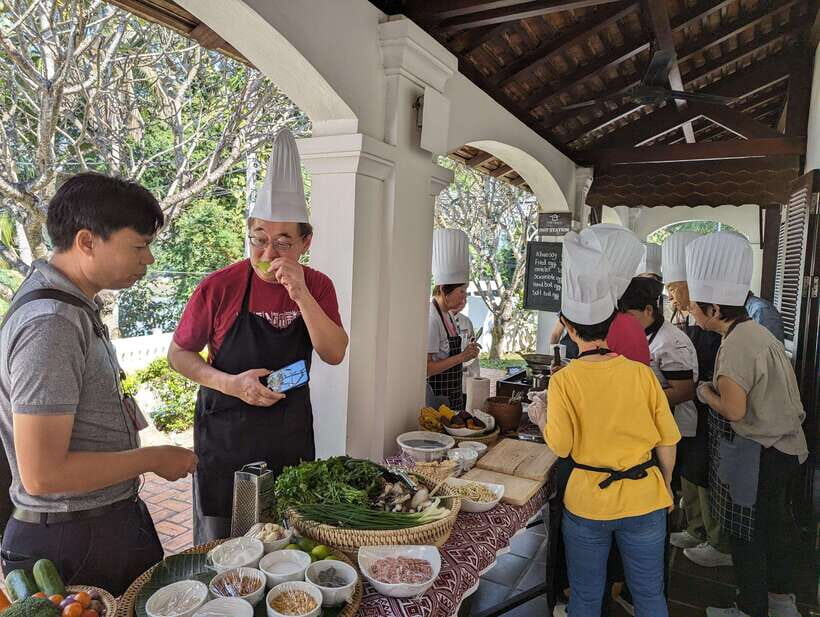
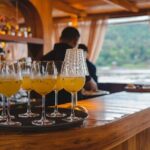
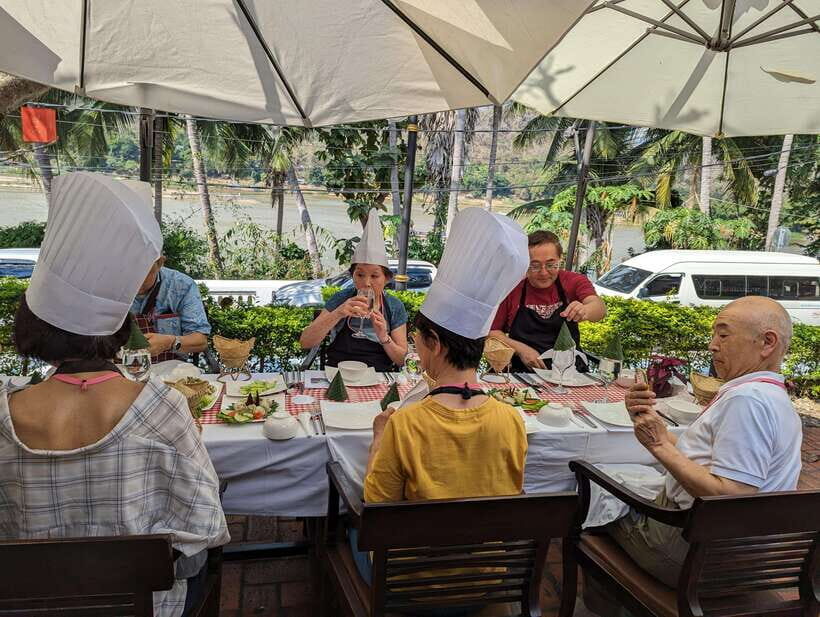
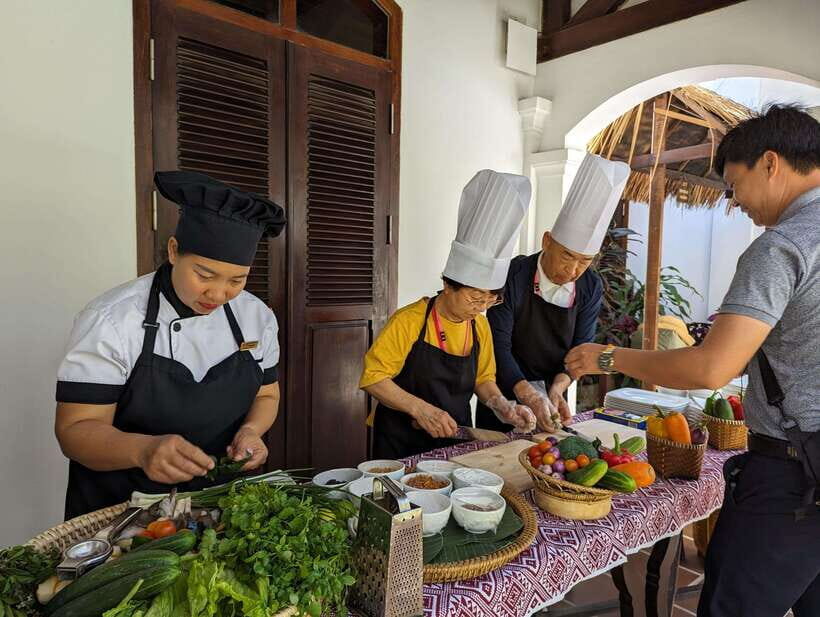
The cooking session happens at the riverside Alame Restaurant, with a terrace that looks out toward the Mekong River. That view does more than look nice. It keeps the day feeling relaxed, so the teaching style can stay patient instead of rushed.
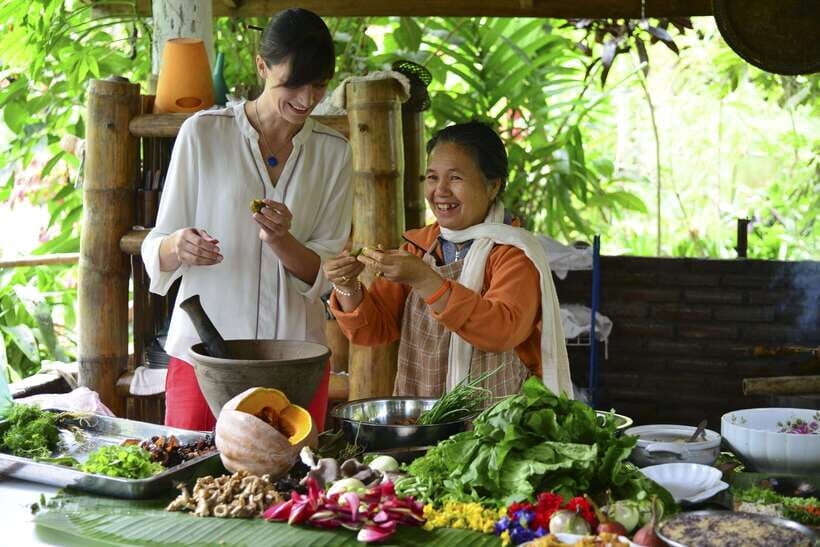
Most sessions are structured so you participate, not just watch. You’ll do cutting and cooking with guidance. In past classes, participants reported making multiple dishes rather than only one main plate, and that you’d contribute to what ends up on the table.
You can also expect some technique teaching, not just recipe steps. One review talked about a sticky rice making procedure, while another highlighted guided preparation for sour soup and laab.
A few more Luang Prabang tours and experiences worth a look


The dishes you’re likely to cook (based on what prior menus included)
Menus can vary by day, but common examples from class reports include:
- a sour soup (often described with pork, mushrooms, and plenty of herbs)
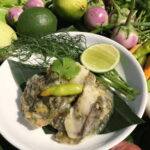
- laab salad (including chicken laab)
- a coconut-based dessert (rice balls in coconut milk were mentioned)
- plus an appetizer course in some sessions
It’s also common for the class to include flavor-building steps like balancing sour and salty, then finishing with fresh herbs. That last step is a big deal in Lao cooking, and it’s one reason the dishes taste different when you try to reproduce them later.
Lunch on the terrace: turning lessons into flavor
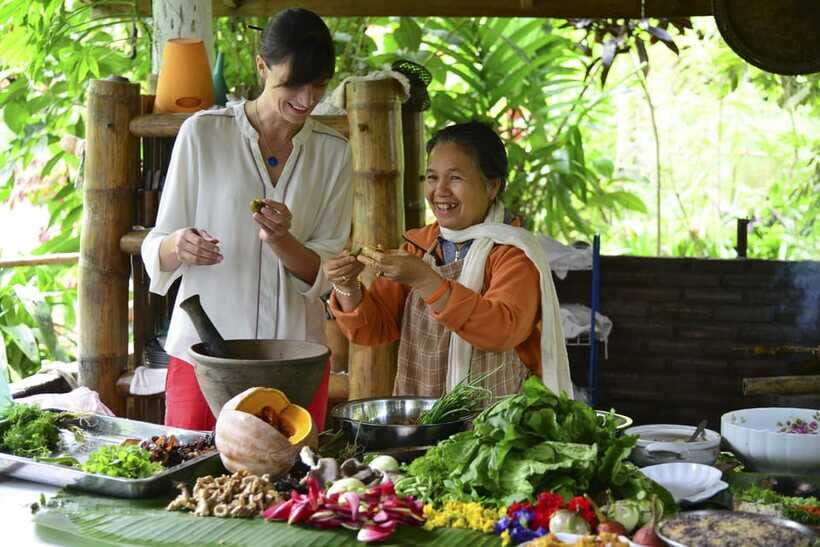
After you cook, you eat what you prepared, typically in a calm, elegant riverside setting. This is where the class pays off. A market lesson becomes real when you taste the dish and can point to the ingredients you chose earlier.
The Mekong-side lunch format is a plus for two reasons:
1) it encourages you to actually slow down and eat
2) it lets you notice the balance of the meal—sour, salty, herbs, spice level—without distraction
One of the most repeated strengths in class experiences is that the meal is not a let-down. People specifically praised how good the food tasted and how well the instructions set them up for success.
Vegetarian options
If you don’t eat meat, this matters: vegetarian options are available, and you just need to notify the operator in advance. That’s a straightforward way to keep the experience enjoyable instead of awkward.
Taking Lao flavors home: what you’ll really walk away with
This class is designed for more than a full stomach. You leave with recipes and new cooking skills you can use later.
What makes the recipe portion useful is that you’ve also learned the logic behind the flavors. When you understand that herbs finish many dishes and that sour notes are not optional, your cooking changes. You stop trying to recreate Lao food like it’s a dish-by-dish imitation and start recreating it like a style.
If you’re the kind of person who cooks at home a few times a month, you’ll probably get more value than someone who only eats out.
Price and value: is $45 worth it?
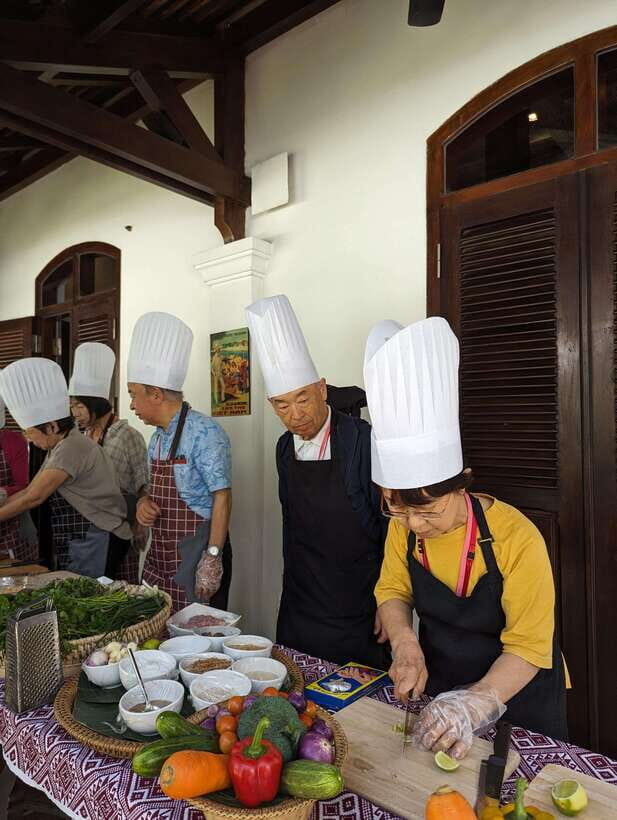
At $45 per person for a roughly 4-hour experience that includes a market tour, hands-on cooking, and lunch, the value is strong for three reasons:
- You get three phases in one: ingredient selection, technique teaching, and a sit-down meal.
- Your group is small, limited to 10 participants, so you’re not lost in a crowd.
- You leave with recipes you can use, which turns the meal into a lasting takeaway.
Could it feel pricey if you expected a long guided walk plus unlimited drinks and no standing? Sure. Drinks are not included, and you should be comfortable standing for extended periods. But if you want a structured, chef-led Lao food day that includes lunch, $45 is in the practical range.
Who should book and who should skip
This is a great fit if you…
- want a hands-on Lao cooking experience rather than only watching
- like learning ingredient names and uses, not just tasting
- enjoy Luang Prabang cultural sites and riverside views
- are traveling with friends and want a small group setting
English instruction also helps a lot. The class is described as English-led, and multiple past experiences mention guides such as Noi and Nov, with instruction that felt clear and patient.
You might want to think twice if you…
- need wheelchair accessibility (this isn’t suitable for wheelchair users)
- have trouble with long standing (participants should be comfortable standing for extended periods)
- are traveling with babies under 1 year or are over 95 years (not suitable)
Practical tips to make the most of your 4 hours
Here’s how to set yourself up for a smoother, more enjoyable class.
- Bring a hat and wear light breathable clothes for the market portion.
- Wear shoes you can stand in. The instruction includes active tasks and time on your feet.
- Expect some prep time. If there’s a waiting window, don’t fight it. Use it to walk nearby and regroup.
- Plan hydration. Drinks are not included, and alcohol and drugs are not allowed during the activity.
- If you’re vegetarian, tell them in advance. Don’t wait until the day-of.
One more tip: when you’re cooking, ask small, practical questions. For example, what makes the dish sour? When do you add herbs? Those tiny answers are what help you cook again at home.
Should you book the Luang Prabang Cooking Class at the Former Royal Palace?
If you want a real Lao cooking day that starts at the market and ends with a meal by the Mekong, this is an easy yes. The combination of chef-led shopping, hands-on work, small group size, and lunch in a heritage setting makes the day feel worth it.
I’d skip it only if you dislike standing for long stretches, need wheelchair access, or know you’ll be bothered by a possible prep-and-wait segment before the main cooking begins. Otherwise, book it. You’ll come away with recipes, technique, and the kind of food knowledge that actually changes how you eat next time you’re in Laos.
FAQ
How long is the Luang Prabang cooking class?
The experience runs about 4 hours, with the market and cooking/lunch parts making up the day.
Where do I meet for the tour?
Meet at Kounxoau Rd, Ban Phonehueng, Luang Prabang, near Wat Xiengthong Temple, close to Victoria Xiengthong Palace.
What does the price include?
It includes the morning market tour (by bicycle or tuk tuk), the cooking class, and lunch.
Are drinks included?
No. Drinks are not included, and you also can’t bring drinks in the vehicle.
Will I cook, or is it mostly a demonstration?
It’s hands-on. You’ll join the cooking session and contribute to the dishes prepared for your lunch.
Can I get a vegetarian option?
Yes. Vegetarian options are available if you notify the operator in advance.
What language is the instructor?
The instructor is English.
How large is the group?
It’s a small group, limited to 10 participants.
Is this suitable for wheelchair users?
No. It’s not suitable for wheelchair users, and it also isn’t recommended for babies under 1 year or for people over 95 years.
What should I bring, and is there anything I can’t bring?
Bring a hat. The activity does not allow weapons or sharp objects, and alcohol and drugs are not allowed.
Is free cancellation available?
Yes. You can cancel up to 24 hours in advance for a full refund.