REVIEW · LUANG PRABANG
Luang Prabang Private Full-Day Tour and Lunch
Book on GetYourGuide →Operated by Best Lao Travel Sole Co., Ltd · Bookable on GetYourGuide
Luang Prabang is a place where your day can feel perfectly scripted. This private full-day tour strings together the city’s most important sights, from temple roofs that hug the ground to the gold stupa view from Mount Phousi. I especially like that it’s built around Laotian temple architecture and that the timing leaves room for photos and slow moments.
Two big wins for me: first, you get a guided look inside the Royal Palace Museum and the Arts and Ethnology Centre, so the temples aren’t just pretty shapes. Second, the tour finishes with Night Market textile shopping, which is the kind of practical souvenir stop that still feels local.
One consideration: the day includes temple visits and a climb up Mount Phousi, so it’s not the best fit if you have mobility issues or use a wheelchair. Bring comfortable shoes and expect some stairs.
In This Review
- Key highlights at a glance
- A Private 8-Hour Plan That Matches Luang Prabang’s Pace
- Royal Palace Museum: More Than Old Buildings
- Wat Sene: The City’s Oldest Temple Setting
- Wat Xiengthong: Classic Lao Rooflines You Can Actually See
- Wat Visoun Stupa and Wat Aham Shrine: Monument vs. Focus
- Arts and Ethnology Centre: Understanding Laos Through Textiles
- Weaving Villages Outside Town: Ban Xiengkhong and Ban Xienglek
- Wat Sensoukharam and Wat Mai: Smaller Stops That Still Matter
- Mount Phousi Sunset: Gold Stupa Views Over the Mekong
- Night Market Textiles: Your Best Souvenir Stop of the Day
- Price and Logistics: Is $110 Worth It?
- Who This Tour Suits Best (and Who Should Skip It)
- Should You Book This Luang Prabang Full-Day Tour?
- FAQ
- How long is the Luang Prabang private full-day tour?
- What does it cost per person?
- What’s included in the price?
- Where does the pickup happen?
- Is the guide available in English?
- Can I cancel and get a full refund?
- What should I bring, and what rules should I follow?
Key highlights at a glance
- Royal Palace Museum: Learn how Laos’ many ethnic cultures connect to what you see around town
- Wat Sene + Wat Xiengthong: See the oldest temple area and the sweeping low roofs of classic Lao design
- Wat Visoun stupa and Wat Aham shrine: A nice contrast between monument and sacred focal point
- Arts and Ethnology Centre + weaving villages: Get beyond “handicrafts” and into how textiles are made
- Mount Phousi sunset: Gilded stupa views over the city and toward the Mekong River
- Night Market textiles: Handmade pieces from local and hilltribe artisans, timed for evening browsing
A Private 8-Hour Plan That Matches Luang Prabang’s Pace
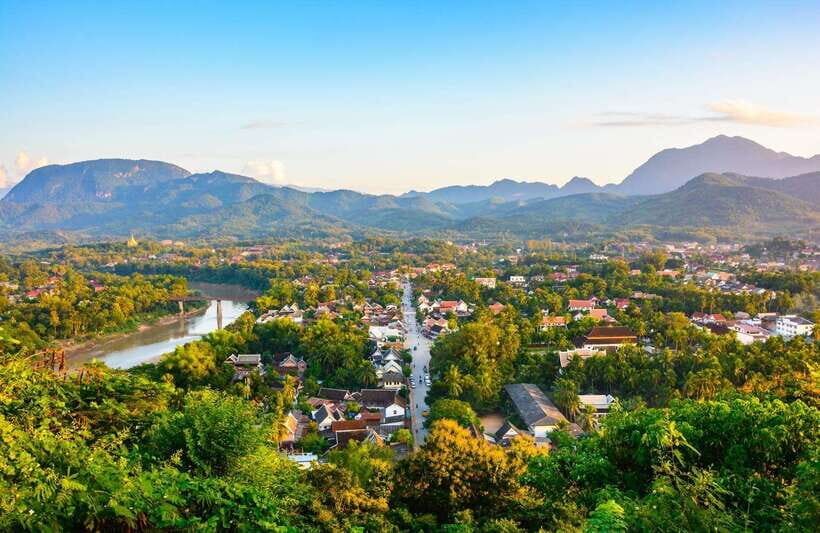
Luang Prabang works best when you slow down. The streets are walkable, but the main sites are spread out enough that a private vehicle makes the day feel calm instead of frantic. With hotel pickup and drop-off, you’re not wasting time figuring out transport or negotiating on your own.
What I like about this setup is the rhythm: you travel briefly between stops, then settle in for guided time at each key place. You also get regular photo stops and breaks, which matters in this part of Laos where the sun can feel strong. And since it’s a private group with an English-speaking expert guide, you can ask questions and move at a sensible pace.
The best versions of this tour come down to your guide’s style. In one past booking, the guide Phai stood out for personable explanations and very strong English, which is exactly what turns temples and museums into something you can actually remember.
You can also read our reviews of more private tours in Luang Prabang

Royal Palace Museum: More Than Old Buildings
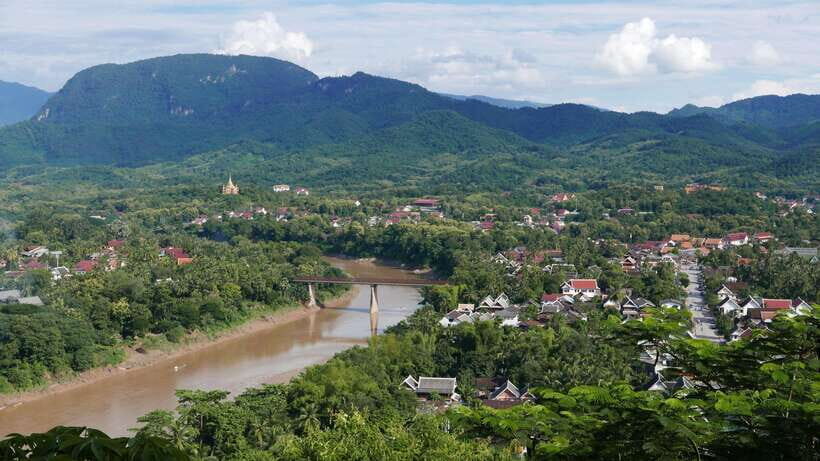
The day begins with pickup and breakfast at your hotel, then you head to the Royal Palace Museum. This stop gives you a useful frame for the rest of the tour. Instead of treating temples as isolated photo stops, you start learning about Laos’ ethnic cultures and the cultural threads that show up across the region.
Expect to see artifacts displayed in a way that helps you connect what you’re looking at to who made it and why. For me, this is the kind of stop that saves you from “sightseeing blur.” Once you’ve got that context, later places like Wat Xiengthong and the Arts and Ethnology Centre land better, because you’re not starting from zero.
You’ll also get the advantage of having an English guide interpreting what you might otherwise miss. Museum details can be easy to glaze over if you’re reading everything alone. Here, you can focus on the big takeaways and still catch the interesting specifics.
Wat Sene: The City’s Oldest Temple Setting
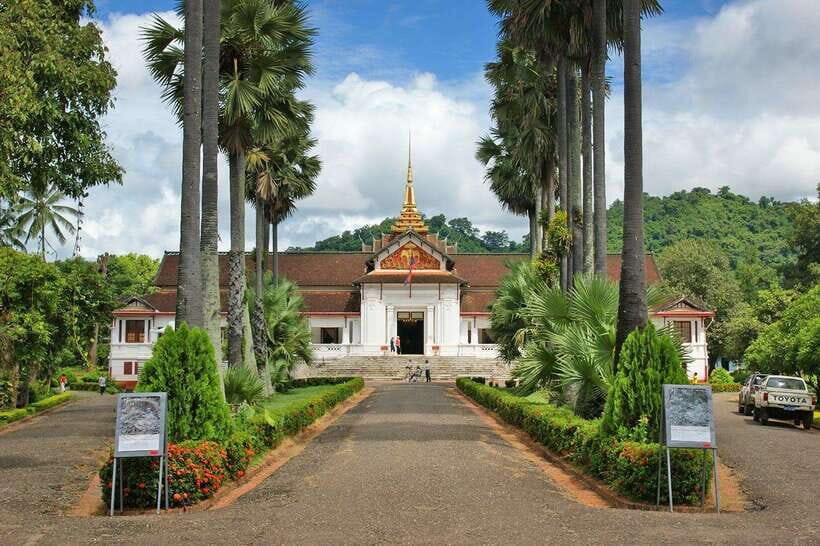
After the museum, the tour moves to Wat Sene, described as the city’s oldest temple. This matters because Wat Sene isn’t just another religious stop. It’s a reminder that Luang Prabang’s sacred life has been anchored here for a long time.
In practice, what you’ll feel is the shift from museum calm to temple energy. You’ll likely get guided time here (with a photo stop and break), which helps you slow down enough to look at the architecture and setting instead of rushing to the next location.
If you care about classical Laotian design and how religious spaces shape daily life, this is a strong “foundation stop.” It sets the tone for Wat Xiengthong, where the roof shapes are the headline.
Wat Xiengthong: Classic Lao Rooflines You Can Actually See
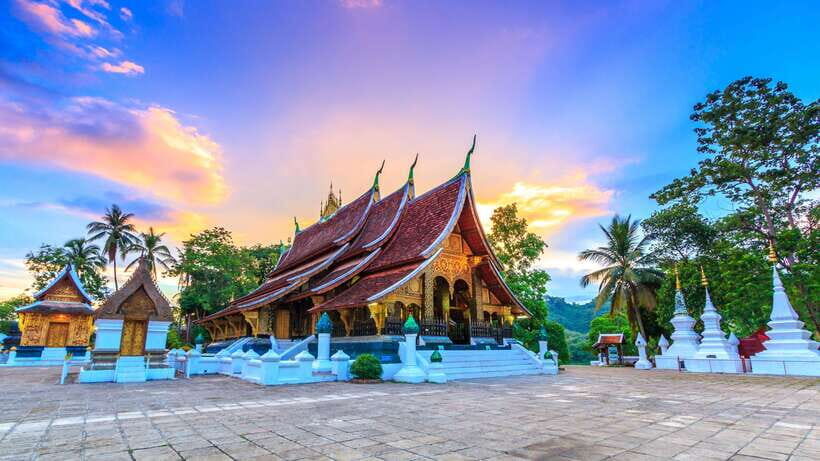
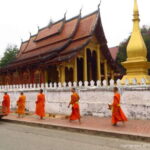
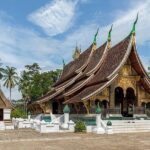
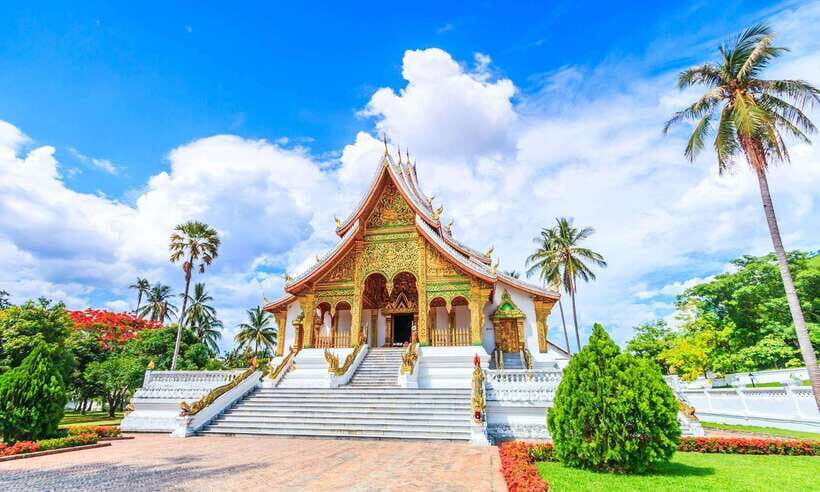
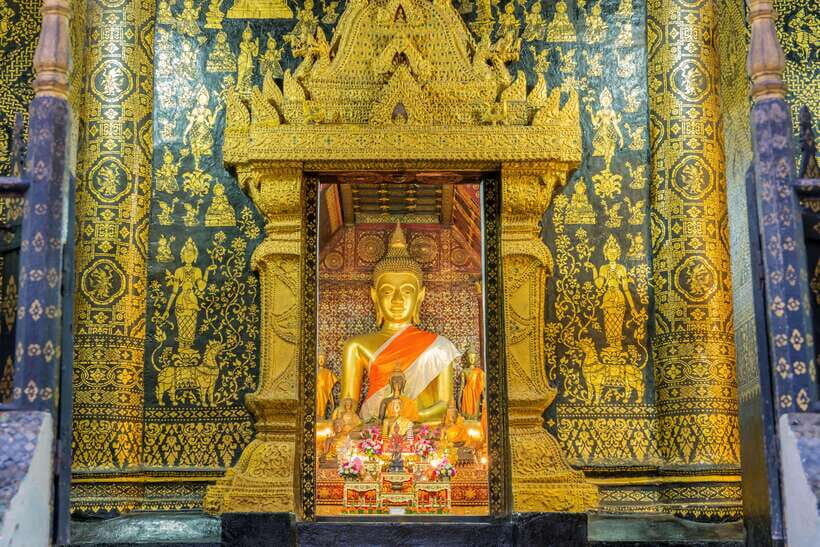
Then comes Wat Xiengthong, one of Luang Prabang’s most famous temples. The most vivid detail in the description is the way the roofs sweep low to the ground. That low, flowing profile is classic Laotian architecture, and it’s the kind of feature that photos usually don’t fully capture.
You’ll spend guided time here, with break time and a photo stop. That’s important because Wat Xiengthong rewards attention. Even if you only remember one thing, make it the rooflines. They frame the temple like a flowing shape, not a stiff box.
Also, the timing helps. When you’re not sprinting between stops, you can stand back and look first, then move in and look again. That simple two-step improves your photos and helps the building make sense in your head.
Wat Visoun Stupa and Wat Aham Shrine: Monument vs. Focus
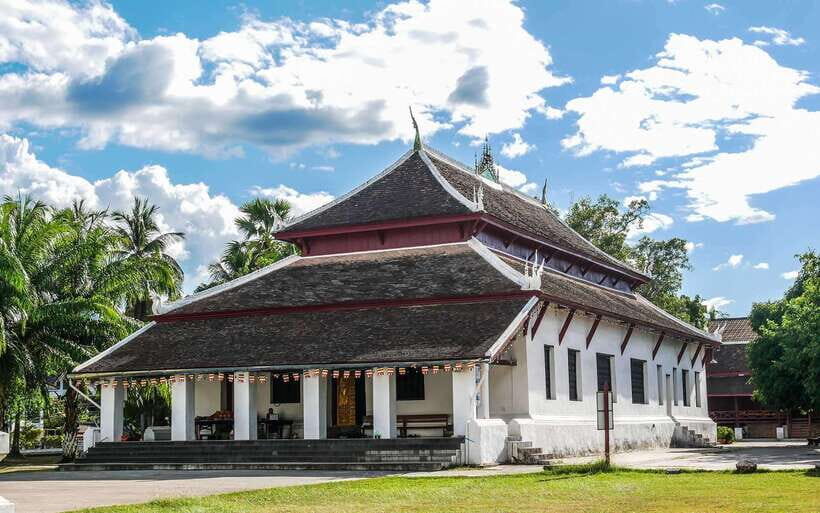
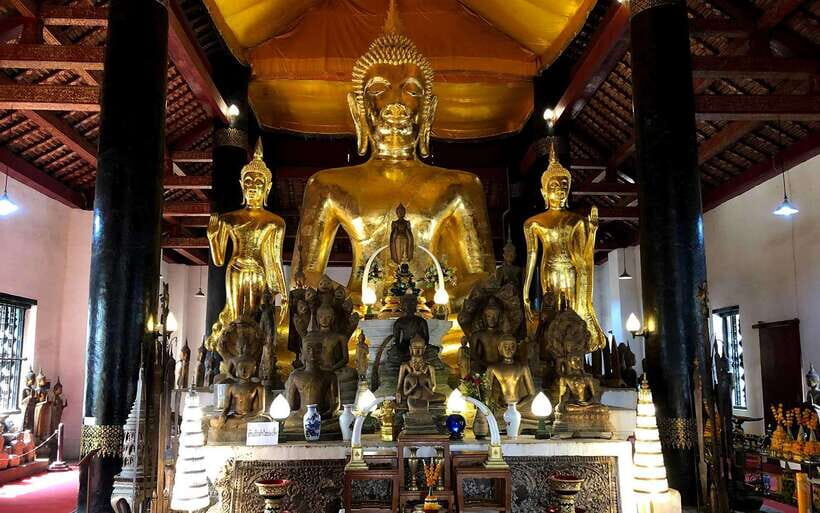
Next you’ll visit the impressive stupa of Wat Visoun and the shrine of Wat Aham. This pairing is useful because it shows different types of sacred focus.
A stupa tends to pull your attention outward and upward, like a landmark you can’t ignore. A shrine often feels more intimate—something you approach with a sense of purpose. Even if you don’t read the fine details, the physical difference changes how you experience the space.
You’ll also get guided time here, plus transfers and breaks that keep the day from turning into one long walking loop. It’s a good balance for first-time visitors who want variety without feeling lost.
A few more Luang Prabang tours and experiences worth a look
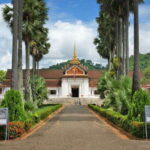
Arts and Ethnology Centre: Understanding Laos Through Textiles
After lunch, the tour shifts gears to learning, with a stop at the Arts and Ethnology Centre. This is one of the best bridges between “seeing” and “understanding.”
You’ll learn about Laos’ many ethnic cultures, and you’ll do it in a way that connects directly to what you’ll likely want to buy later. Textile craft in this region isn’t just decoration. It’s identity—patterns, technique, and meaning carried in cloth.
If you’re the type who likes to shop with your eyes open, this stop is a win. You’ll be in a better position to recognize differences in style and to ask the right questions at the end of the day.
Weaving Villages Outside Town: Ban Xiengkhong and Ban Xienglek
The tour then heads out to the weaving villages of Ban Xiengkhong and Ban Xienglek. This is where the day starts to feel hands-on. Instead of only learning in buildings, you get the chance to see where textile work is part of everyday life.
One practical tip: wear light layers and keep water handy. Even when you’re not walking far, these village visits can involve short stretches of sun exposure. The tour does suggest bringing sunscreen and a hat, and you’ll be glad you listened.
This part also helps you shop smarter later. When you understand the village context and the basic craft focus, you’re less likely to buy something random just because it looks nice. You’re more likely to buy something you can explain.
Wat Sensoukharam and Wat Mai: Smaller Stops That Still Matter
The temple circuit continues with additional sites, including Wat Sensoukharam and Wat Mai. These stops are valuable because they broaden your understanding of Luang Prabang beyond the two big headline temples.
Wat Sensoukharam appears in the schedule as a photo stop with guided time. Wat Mai is also included before Mount Phousi. Taken together, they add variety to the day so you’re not just repeating the same view angles.
For many people, the temptation is to treat temples like a checklist. I like the way this tour uses multiple temples to build a more complete picture—different buildings, different moods, and different textures of detail.
Mount Phousi Sunset: Gold Stupa Views Over the Mekong
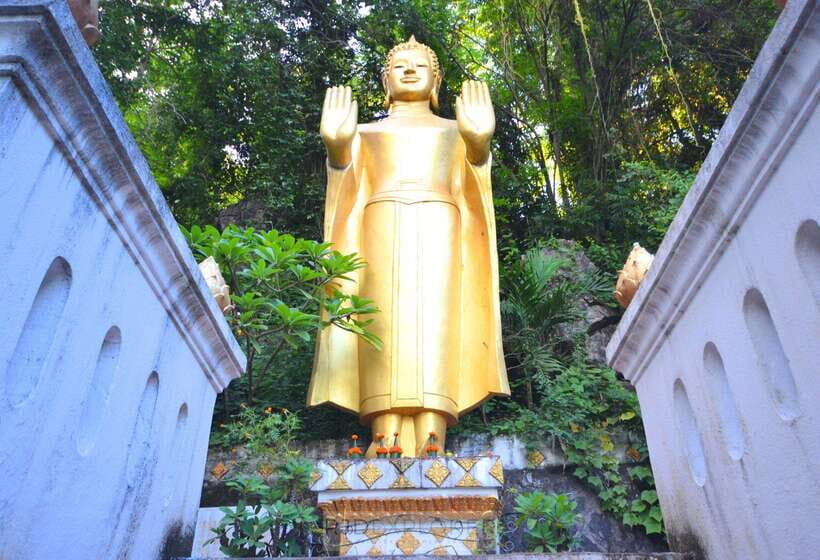
Then you climb up to the top of Mount Phousi for panoramic views at sunset. This is one of those Luang Prabang moments that feels both spiritual and scenic, especially because you’ll explore a sacred, gilded stupa while the city lights and river glow start to show.
Bring your patience. Even if the climb is shorter than you feared, the steps can feel like they go on forever when you’re dealing with heat and crowds. Comfortable shoes really matter here.
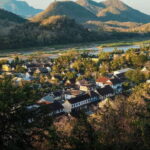
What you’ll see from the top is the payoff: a wide view of Luang Prabang and toward the Mekong River. It’s a different perspective than you get from street level or temple courtyards. You start to understand how the city sits in relation to the water and the surrounding terrain.
Also, the timing is smart. Visiting near sunset gives you better light for photos and a calmer atmosphere than mid-afternoon.
Night Market Textiles: Your Best Souvenir Stop of the Day
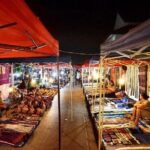
The tour ends with a visit to the famous Night Market, where you can browse handmade textiles made by local and hilltribe people surrounding Luang Prabang.
This is a practical finishing touch. By this point, you’ve learned how textiles connect to culture, so you’re not guessing. You can look for quality, pay attention to pattern choices, and ask questions with more confidence because the day already gave you context.
A few behavior notes from the rules you’re given: no flash photography and no smoking. Beyond the obvious, I’d also suggest keeping your phone camera ready for general scenes, but focus on seeing the market with your own eyes first. Textiles are best appreciated slowly, like you’re reading a page of details.
Price and Logistics: Is $110 Worth It?
At $110 per person for about 8 hours, the price is only “reasonable” if the included basics save you effort and stress. Here’s what you get for that money: private transportation, an English-speaking expert guide, hotel pickup and drop-off, entrance fees for the sites covered, and one lunch at a local restaurant.
For many people in Luang Prabang, the biggest hidden cost is time. If you try to DIY this day, you’ll spend energy coordinating transport, paying separate entrance fees, and trying to interpret temples and museums without a guide. This tour packages those moving parts into one block.
You should still plan for personal expenses like water, snacks beyond lunch, and any shopping budget. And keep in mind the tour doesn’t include the visa fee upon arrival or international airfare, which is normal, but worth noting so the final trip cost doesn’t surprise you.
Overall, I’d call this good value for someone who wants the key sights plus cultural learning, without turning the day into logistics homework.
Who This Tour Suits Best (and Who Should Skip It)
This tour fits you if you want a focused day in Luang Prabang: major temples, museum context, village weaving visits, sunset views, and a wrap-up at the Night Market.
It also makes sense if you’re traveling as a small private group and want your own pace instead of sharing attention with strangers. The English guide helps with interpretation, and the private setup typically makes Q&A easier.
It may not be the best choice if you have mobility impairments or use a wheelchair. The schedule includes a climb up Mount Phousi and time in temple areas where walking surfaces may vary.
If you’re a “one-day highlights” person who still cares about meaning—not just photos—this is a strong match.
Should You Book This Luang Prabang Full-Day Tour?
Book it if you want one clean day that covers the must-sees and still teaches you how to read Luang Prabang. The blend of Royal Palace Museum context, temple architecture like Wat Xiengthong’s low sweeping roofs, and the culture-to-craft link at the Arts and Ethnology Centre makes the day feel coherent instead of random.
Skip it (or choose something gentler) if your biggest priority is low walking and minimal stairs. The Mount Phousi climb is a real factor, and this tour isn’t designed for wheelchair users.
My final take: if you enjoy temples, appreciate craft, and want sunset with a view, this private tour gives you a lot of payoff for one day’s effort.
FAQ
How long is the Luang Prabang private full-day tour?
The tour duration is 8 hours.
What does it cost per person?
The price is $110 per person.
What’s included in the price?
It includes private transportation, an English-speaking expert guide, hotel pickup and drop-off, entrance fees as mentioned in the itinerary, and 1 lunch at local restaurants.
Where does the pickup happen?
Pickup is included in Luang Prabang, and the guide and driver pick you up at your hotel or guesthouse lobby.
Is the guide available in English?
Yes, the live tour guide speaks English.
Can I cancel and get a full refund?
Yes. Free cancellation is available up to 24 hours in advance for a full refund.
What should I bring, and what rules should I follow?
Bring comfortable shoes, a hat, a camera, sunscreen, and water. Smoking is not allowed, and flash photography is not allowed. The tour is also not suitable for people with mobility impairments or wheelchair users.