REVIEW · VIENTIANE
Half-Day Vientiane City Bike Tour | Laos
Book on Viator →Operated by Grayline Vietnam Threeland Travel · Bookable on Viator
You can cover Vientiane’s big sights without feeling rushed. I like the mix of bike time by the Mekong and the straightforward temple-and-museum route that fits a half day. The tour also gets extra points for a hands-on English-speaking guide who explains what you’re seeing in plain terms, not just dates on plaques. One thing to think about: the schedule is tight and you should have moderate physical fitness for several hours of riding and site walking.
At the sites, I enjoy how the stops are varied but still connected by Laos’ cultural threads. Wat Si Saket slows you down with a museum-like temple visit, Ho Phrakeo adds a focused backstory, and Pha That Luang gives you the main symbolic moment. My only caution is practical: you’ll spend a solid block of time at Pha That Luang, so plan for heat, sun, and a slower pace there.
In This Review
- Key highlights you’ll feel right away
- Why Vientiane Works So Well on Two Wheels
- Price and what’s included in your $90
- The 5-hour flow: a half-day plan that stays on schedule
- Wat Si Saket: a surviving temple with a museum-style visit
- Ho Phrakeo Museum and the Emerald Buddha link
- Pha That Luang: Laos’ single most important stupa
- Lao Textile Museum in Ban Mixay: craft time after temples
- Guide time that turns stops into a story
- What to pack and how hard the ride feels
- Should you book this Vientiane bike tour?
- FAQ
- What is the duration of the Half-Day Vientiane City Bike Tour?
- What time does the tour start?
- Is hotel pickup and drop-off included?
- Which attractions are included on the tour?
- What does the price include?
- Can I cancel for free?
Key highlights you’ll feel right away
- Hotel pickup and drop-off so you start riding without logistics stress
- Mekong River riding for views you’d miss on foot
- Wat Si Saket with a temple that survived the 1828 Siamese war
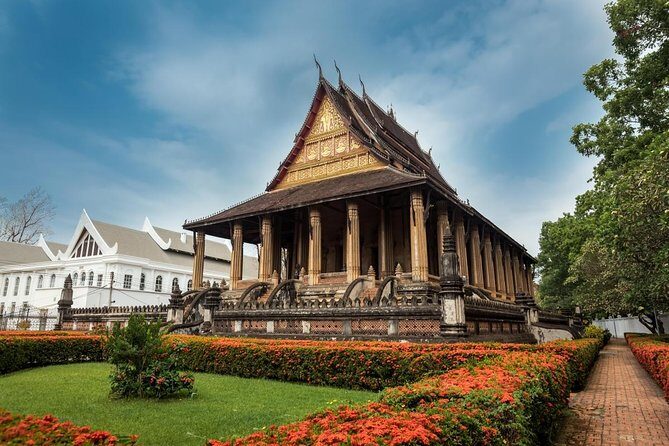
- Ho Phrakeo Museum tied to the Emerald Buddha story in Lan Xang
- Pha That Luang as Laos’ single most important monument and main symbolic stupa
- Lao Textile Museum in Ban Mixay to balance temples with craft and culture
Why Vientiane Works So Well on Two Wheels
Vientiane is an easy city to understand when you’re not stuck in the slow rhythm of traffic. A bike tour lets you move between major sights while still feeling like you’re part of everyday Vientiane. You also get the best of both worlds: temple time on foot and “in-between” riding time along the Mekong River area.
That Mekong connection matters more than it sounds. When you’re cycling, you’re not just viewing a river from one angle. You’re getting a sense of how the city relates to the water, and it helps the landmarks feel less like separate stops and more like a connected afternoon.
A bike also helps you dodge one common problem in temple-heavy days: standing still. The route still includes plenty of walking, but cycling makes the long morning feel more fluid and less tiring overall.
You can also read our reviews of more cycling tours in Vientiane

Price and what’s included in your $90
At $90 per person, this tour isn’t trying to be the cheapest option in Vientiane. The value comes from what you do not have to arrange yourself.
Your price covers an English-speaking guide, bike rental, hotel pickup and drop-off, bottled water, and admission fees for each listed stop. It also includes the big pieces that usually add up on your own: transport coordination and ticketing. If you’d otherwise be hiring a car plus paying entry fees plus trying to figure out bike logistics, the math usually starts to look sensible.
One more quality-of-life factor: you’re on a private tour, meaning it’s only your group. That typically makes a half-day itinerary feel less rigid because you can ask questions and adjust pacing when the guide can see you need it.
The 5-hour flow: a half-day plan that stays on schedule
This runs for about 5 hours and starts at 8:30am for the morning option. The stop durations are deliberately structured: you’ll spend around 1 hour at Wat Si Saket, 1 hour at Ho Phrakeo Museum, 2 hours at Pha That Luang, and 1 hour at the Lao Textile Museum in Ban Mixay.
Because each admission time is built in, you’re not losing half your afternoon waiting at gates or figuring out what’s open. It’s a “ride, see, learn, move” rhythm that works well if you only have one day in town.
One practical note: the overall itinerary is short enough that you won’t get worn out by travel time. You will, however, feel the combined effect of riding plus walking. Comfortable shoes and a sun plan help a lot.
Wat Si Saket: a surviving temple with a museum-style visit
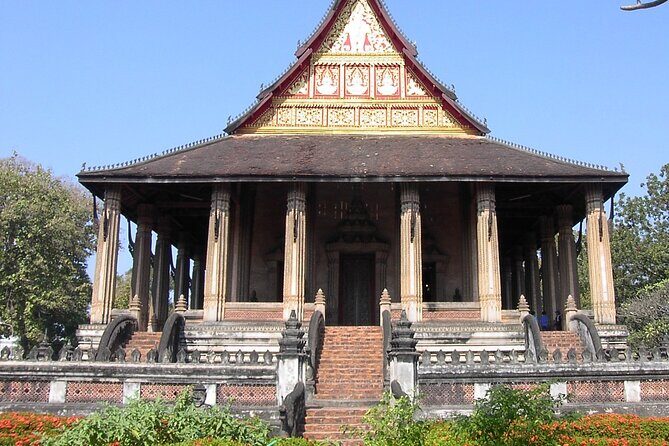
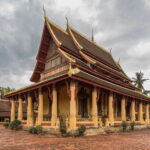
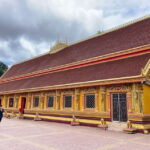
Your tour begins with Wat Si Saket, and the visit is scheduled for about 1 hour with admission included. This temple is especially meaningful because it survived the Siamese war of 1828, making it one of the older anchors of Vientiane’s religious landscape.
What I like about this stop is the tone. It’s not just a quick photo stop; it feels designed for slower attention. Since the stop is described as religious museum style, you should expect a more interpretive visit where the guide helps you understand what you’re looking at and why it matters.
The main consideration here is time and focus. A 1-hour visit can go fast if you rush or if you’re distracted by too many photos. If you want the most value, slow down early. Let your guide’s context guide your attention so you remember why the building and collection are there.
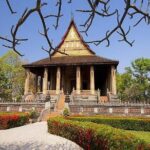
Ho Phrakeo Museum and the Emerald Buddha link
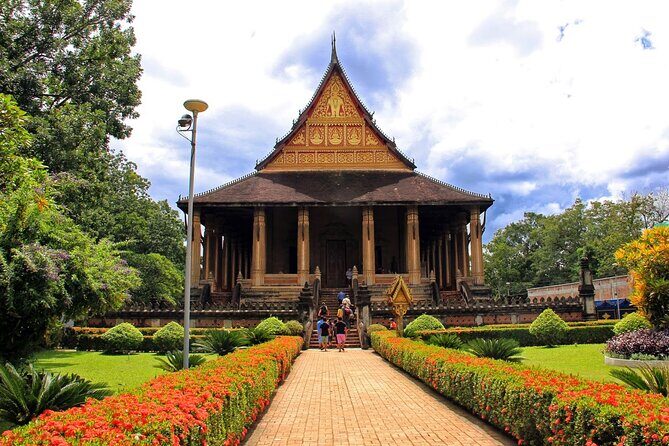
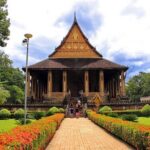
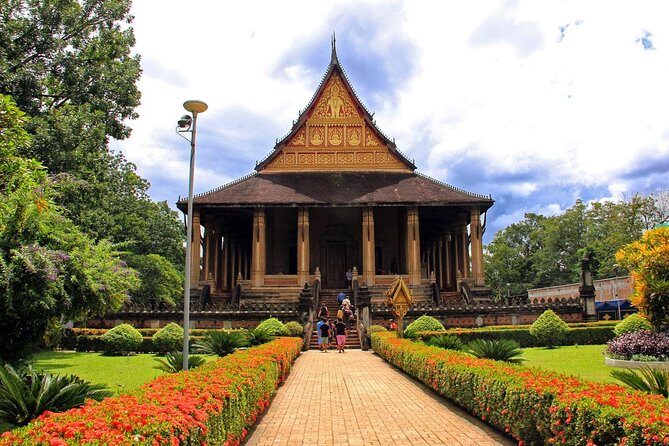
Next comes Ho Phrakeo Museum, also around 1 hour with admission included. This is tied to the Emerald Buddha statue story, known as Pra Keo. The museum’s former home-temple role connects it to the Lane Xang Kingdom era, and it’s noted as being linked to that Emerald Buddha presence until the 18th century.
Even if you don’t know the full political timeline, the point of the museum is clear: it’s a place where religious objects and antiques sit inside a larger cultural story. The stop description also mentions a collection of Buddha statues, antiques, and art, so you’ll have more to look at than a single monument photo moment.
If you’re a detail person, this is a great stop. You can spend time letting the guide point out the objects and how they connect to Laos’ identity. If you prefer outdoor views, you might find it more indoor and interpretive than you expected, but the schedule keeps it from becoming a long pause.
You can also read our reviews of more city tours in Vientiane


Pha That Luang: Laos’ single most important stupa
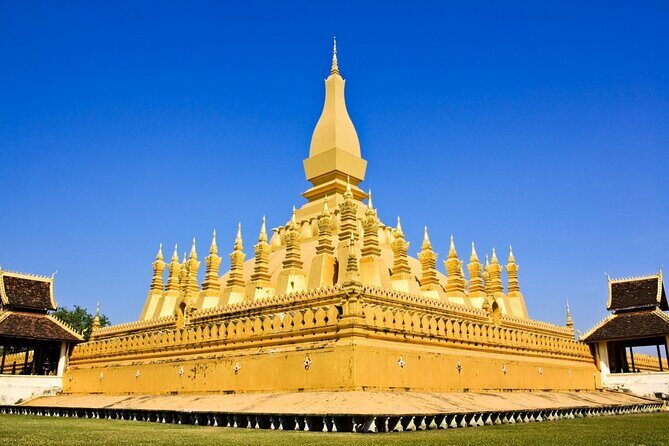
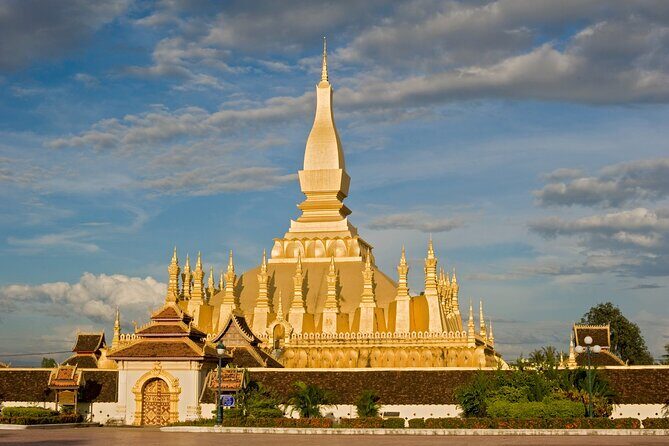
The highlight of many Vientiane days is Great Sacred Stupa (Pha That Luang), and this tour gives it the time it deserves: about 2 hours with admission included. It’s described as the single most important monument in Laos and the main symbolic stupa.
Here’s the story that gives the site weight. The stupa is said to cover an original small stupa containing a piece of the chest bone of Buddha. That kind of religious symbolism is exactly why guides tend to spend longer here: you’re not just looking, you’re absorbing the meaning.
Two hours is also practical. Pha That Luang can feel visually impressive, but the longer visit lets you take breaks and move at a calm pace. The main drawback is the obvious one: plan for heat and sun. If you’re sensitive to temperature changes, pace yourself, use the shade when you can, and drink the bottled water provided.
Lao Textile Museum in Ban Mixay: craft time after temples
For the final stop, you’ll head to the Lao Textile Museum in Ban Mixay, scheduled for about 1 hour with admission included. This is a smart way to end a temple-focused day. Instead of finishing with more stone and symbolism, you end with something hands-on and cultural you can relate to daily life.
The museum visit is framed as learning about Lao textiles and exploring the variety of textile work in Laos. Even if you don’t buy anything, this kind of stop gives your brain a new theme to remember beyond religious landmarks.
If you want value here, ask your guide what to notice. Fabric types and weaving styles can look similar if you’re looking too fast. With a guide’s cues, you’ll start seeing patterns and materials as part of a bigger story about everyday culture.
Guide time that turns stops into a story
The biggest difference between an average sightseeing day and a good one is how the guide connects the dots. This tour is built around an English-speaking guide, and you’ll feel that during the explanations at each stop.
From what’s been shared about guides in this route, both Mr Sak and Vient have been praised for doing more than reciting facts. Mr Sak is noted for being punctual and for laying out a day plan in excellent English, then sharing history in a way that covers both recent and ancient Laos. Vient is singled out for delivering interesting information about the sites and for making the experience feel thoughtful rather than rushed.
Here’s how you can use that to your advantage. Don’t save questions for the end. Ask one question at each stop—why this place matters, or how this site fits into Laos as a whole. You’ll learn faster, and the ride between stops will feel less like commuting and more like traveling with a narrative.
What to pack and how hard the ride feels
The tour says you should have moderate physical fitness, so treat it as an active half-day rather than a sit-and-snap photo excursion. You’ll bike through the city and then walk at multiple sites, including a 2-hour stupa visit.
Pack for comfort and visibility:
- wear comfortable, closed-toe shoes for uneven surfaces
- bring sun protection since you’ll spend time outdoors
- use the bottled water provided and consider adding a small extra if you run hot
- dress in a way that works for temple visits, since you’ll be entering religious sites
Also, consider your bike fit. You’re getting bike rental included, so expect the team to set you up for the ride, but don’t hesitate to speak up if something feels off before you start.
If you’re comfortable riding a bike at city speeds for a few hours, you’ll likely enjoy this format. If you’re not confident on two wheels, the “private guide + set route” helps, but it still remains a bike tour.
Should you book this Vientiane bike tour?
I’d book this tour if you want a smart half-day that hits Vientiane’s biggest spiritual landmarks and also gives you a cultural balance at the textile museum. The pricing makes sense because admissions, bike rental, and hotel transport are included, which usually makes DIY days cost more once you add them up.
You might skip it if you hate riding and prefer to stay purely on foot, or if you know you struggle in strong midday sun because Pha That Luang takes a full block of time. Also, if you’re traveling around Laos New Year, note that the tour isn’t available April 13–16.
If your goal is to get oriented fast and learn what you’re looking at, this is one of the better ways to do it.
FAQ
What is the duration of the Half-Day Vientiane City Bike Tour?
It runs for about 5 hours.
What time does the tour start?
The start time listed is 8:30am.
Is hotel pickup and drop-off included?
Yes. Hotel pickup and drop-off are included.
Which attractions are included on the tour?
The tour includes Wat Si Saket, Ho Phrakeo Museum, Great Sacred Stupa (Pha That Luang), and the Lao Textile Museum in Ban Mixay.
What does the price include?
It includes an English-speaking guide, hotel pickup and drop-off, bottled water, admission fees, and bike rental.
Can I cancel for free?
Yes. You can cancel for a full refund if you cancel up to 24 hours in advance.