REVIEW · LUANG PRABANG
Laos Cooking Class in Luang Prabang
Book on Viator →Operated by Grayline Vietnam Threeland Travel · Bookable on Viator
A good cooking class should teach flavor, not just technique. In Luang Prabang, this one is great for hands-on cooking with local chefs and for sampling a full Lao meal you make yourself. The only catch is that the market side of things can feel a bit chaotic at first if you prefer everything calm and orderly.
You’ll be working in a small-group setup and following clear guidance, which matters when you’re learning Lao dishes like Mok Pa and spicy Lao dips. If you’re unlucky with group size, there’s also a chance of cancellation, since this class has limited headcount to run.
Key takeaways before you book
- Small group size (max 12) makes it easier to get real help while you cook.
- Market + ingredient picking helps you understand what drives Lao flavors.
- You cook classic dishes such as Mok Pa, Laap, and lemongrass chicken with herbs.
- There’s an included meal, so you’re not just tasting small samples.
- You take home a recipe book, which is what turns the day into dinners later.
In This Review
- Market Time in Luang Prabang: Finding Ingredients That Actually Matter
- Garden-to-Kitchen Prep: Herbs, Produce, and Why Lao Cooking Feels Different
- The Cooking Flow With Chef Sit: Hands-On, Step-by-Step Help
- What You’ll Cook: Mok Pa, Laap, Lemongrass Chicken, and Spicy Dips
- The Included Meal: Eat What You Cook, Not Just What Someone Else Made
- Price and Value in Luang Prabang: Is $58 Worth It?
- Small Group Size and Timing: Why 4 Hours Feels Just Right
- Meeting Point in Luang Prabang: Simple to Find, Easy to Return
- Who This Lao Cooking Class Suits Best
- Quick Tips Before You Go (So You Enjoy the Market and the Cooking)
- Should You Book This Laos Cooking Class in Luang Prabang?
- FAQ
- How long is the Laos cooking class in Luang Prabang?
- Where does the experience start and end?
- What time does the class start?
- Is there a market visit?
- What dishes will I learn to make?
- What’s included in the price?
- Is the class offered during Laos New Year?
Market Time in Luang Prabang: Finding Ingredients That Actually Matter
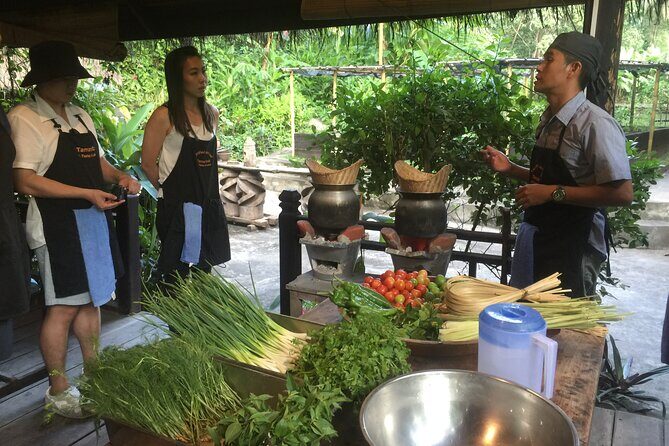
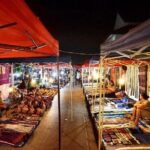
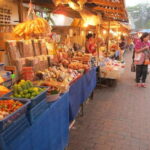
If you pick the morning option, you start with a meetup in central Luang Prabang, then head to the local market. The value here isn’t just shopping. It’s learning what to look for and why Lao cooks build flavor from fresh ingredients and the right herbs, not heavy sauces or complicated steps.
This is also where you get your bearings. In one class experience, people described the market as chaotic by Western standards, which makes sense. You’ll see lots of smells, colors, and action all at once. The best strategy is simple: go with the flow, ask quick questions, and treat it like ingredient research. Your instructor helps you translate what you’re looking at so it doesn’t turn into sensory overload.
Once you’ve selected ingredients, you’ll take that knowledge into the kitchen. That’s when the day stops being a demo and starts being a real lesson.
Garden-to-Kitchen Prep: Herbs, Produce, and Why Lao Cooking Feels Different
Before you start cooking, you’re not stuck guessing. You’re guided toward the herbs and produce that show up in Lao classics. There’s even an ingredient-gathering element, so you can connect the dots between what’s growing and what’s on the plate.
This matters because Lao cooking often tastes layered, not just spicy. You’ll learn how herbs and aromatics contribute fragrance, while chili and seasoning add heat and depth. When you’ve handled ingredients yourself, it’s easier to recreate those flavors later from memory.
You’ll also get a clearer sense of portion and balance. Lao dishes usually aim for harmony: fresh herbs, salty notes, sour from lime or similar flavors (you’ll see how that plays out during cooking), and heat that doesn’t have to be extreme to be convincing.
You can also read our reviews of more cooking classes in Luang Prabang

The Cooking Flow With Chef Sit: Hands-On, Step-by-Step Help
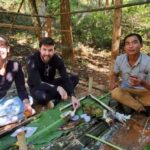
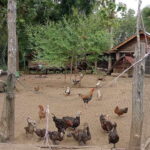
The main event is a practical, small-group class in an open-air or rural-style kitchen setup. In a past class, the setting was described as especially scenic, and the kitchen approach makes sense: you can see what’s happening, and you’re not stuck watching from across a counter.
The teaching style is what you’re really paying for. One review specifically credited Chef Sit for making it feel easy, which is exactly what you want in a cooking class. The typical flow goes like this:
- You receive clear instructions and an outline of what you’ll make.
- The instructor demonstrates key steps so you can copy the process.
- Then you cook your own portions, with help available when you hit a snag.
- You finish by eating what you made, which closes the loop fast.
You’re not just collecting photos. You’re learning timing—when to stir, when to season, and when to stop. That’s the difference between a good dish and a decent one.
What You’ll Cook: Mok Pa, Laap, Lemongrass Chicken, and Spicy Dips
This class covers a lineup of Lao dishes that give you a wide view of everyday flavors. Based on the experience description, you should expect classics such as:
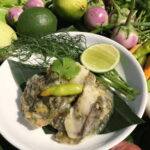
- Mok Pa: a Lao fish dish often built around herbs and fragrant seasoning.
- Lemongrass stuffed with chicken and herbs: aromatic, herby, and built for real flavor payoff.
- Laap: a Lao salad-style dish where seasoning and freshness are everything.
- Lao spicy dipping sauces: the kind of sauces that make you understand why Lao food is so addictive.
Different classes can shift the exact number of dishes you complete, but the overall idea stays the same: you’ll cook enough variety to see how Lao flavors combine across multiple courses.
One useful clue from a review: a group made a mix that included a dip, a dessert, and several other dishes. So if you’re the type who wants a full day of cooking variety, that fits your expectations. Even if dessert isn’t always guaranteed in every scheduling block, plan on at least savory items and at least one condiment or sauce that teaches you how Lao cooks build punch.
The Included Meal: Eat What You Cook, Not Just What Someone Else Made
This is one of the most underrated parts of any cooking class. You don’t just taste tiny samples or stand around while someone else plates everything. You sample your creations with an included meal, which means you’ll actually sit down and eat the results of your work.
That matters because cooking is half smell, half timing. When you taste right after cooking, you get immediate feedback: you understand what the sauce needed, whether seasoning landed where you expected, and how herbs change a dish once heat has done its job.
It also turns the class into a social event. You’ll be around other learners, comparing notes, laughing when something needs fixing, and then enjoying the finished plates. That’s a big reason this kind of tour works for all ages and skill levels, from first-timers to people who already like cooking.
Price and Value in Luang Prabang: Is $58 Worth It?
For $58 per person (about 4 hours of time), you’re not paying just for a recipe. You’re paying for ingredient guidance, cooking instruction, and the food itself.
Here’s the value math that usually makes this worth it:
- You get ingredients included, which is often where cooking classes hide costs.
- You get a meal included, so you’re not paying extra just to justify the experience.
- You leave with a recipe book, which extends the value beyond the day.
If you compare it to a single solid meal plus a guided food experience elsewhere in Luang Prabang, this tends to land in a fair range. The bigger win is learning the method. When you can recreate a Lao dip or a herb-driven dish at home, that’s value you can repeat.
One more thing: this experience caps group size at 12 travelers. That kind of limit is what makes instruction feel personal rather than rushed.
A few more Luang Prabang tours and experiences worth a look


Small Group Size and Timing: Why 4 Hours Feels Just Right
The class runs about 4 hours and ends back at the meeting point. That time window is helpful. It’s long enough to shop, cook multiple dishes, and sit down to eat, but not so long that it drags into a full-day food marathon.
The small group size matters here:
- You get more direct attention when you’re chopping or mixing.
- You spend less time waiting for your turn.
- The chef can explain adjustments to your dish without you feeling invisible.
If you’re planning a packed Luang Prabang itinerary, this is also a nice anchor. A morning start at 8:30 am works well if you want to be done before the heat and crowds build.
Also note: the tour is not available April 13–16 for Laos New Year. If you’re traveling around that period, check dates early.
Meeting Point in Luang Prabang: Simple to Find, Easy to Return
You’ll meet at Tamarind (the spot listed as TamarindV4VR+VMF), on Kingkitsarath Rd. The tour ends back at the meeting point, which is practical when you’re juggling hotel locations or shared transport plans.
You’ll also receive a mobile ticket, which is convenient if you prefer not to manage paper confirmations. If you’re the type who likes to arrive early to calm nerves, give yourself a few extra minutes to locate the meeting point without stress.
Who This Lao Cooking Class Suits Best
This is the kind of activity that works for a wide range of travelers because it’s structured and supportive.
You’ll probably love it if:
- you want real instruction instead of a food walk where you only sample
- you enjoy hands-on activities like chopping, mixing, and tasting
- you want to understand Lao cooking through ingredients and technique
- you’re traveling with family or friends of mixed cooking experience
It may feel less ideal if:
- you dislike markets and prefer to skip the ingredient shopping portion
- you want to eat fully vegetarian or have very specific dietary needs (the menu items listed are not described in a way that guarantees substitutions)
Quick Tips Before You Go (So You Enjoy the Market and the Cooking)
- Wear comfortable shoes. You’ll be moving during the market stop and standing at a cooking station.
- Bring a light layer. Even in warm weather, kitchens and market mornings can shift in comfort.
- Go in ready to taste. The class includes food and samples, so your palate matters.
- Ask simple questions early. If you ask once in the market, the rest of the day feels easier.
- Plan for the recipe book. Take photos of your favorite steps if you like, but the printed recipes are the payoff for cooking at home.
Should You Book This Laos Cooking Class in Luang Prabang?
If you want an authentic Lao food experience that’s more than a show, I’d say book it. The strongest reasons are practical: you cook, you get help from the chef (like Chef Sit), and you end with an included meal plus a recipe book you can use later.
The only real decision points are personal. If you hate markets or you’re traveling during Laos New Year (April 13–16), plan differently. And if you’re booking very last-minute, remember that the class needs enough participants to run, so keep an eye on updates.
For value, $58 makes sense when you factor in ingredients, instruction, meal, and take-home recipes. This is one of those trips that turns Luang Prabang into something you can recreate at home.
FAQ
How long is the Laos cooking class in Luang Prabang?
The class runs for about 4 hours (approximately).
Where does the experience start and end?
It starts at Tamarind (TamarindV4VR+VMF, Kingkitsarath Rd, Luang Prabang, Laos) and ends back at the same meeting point.
What time does the class start?
The start time listed is 8:30 am.
Is there a market visit?
If you choose the morning tour, you have the chance to visit the local market, explore Lao ingredients, and even select your own ingredients for the dishes.
What dishes will I learn to make?
You’ll learn dishes such as Lao spicy dipping sauces, Mok Pa, lemongrass stuffed with chicken and herbs, Laap, and more.
What’s included in the price?
Cooking class & ingredients and a meal are included.
Is the class offered during Laos New Year?
No. The tour/activity is not available on April 13th–16th (Laos New Year).