REVIEW · LUANG PRABANG
Luang Prabang: Bamboo Forest Cooking-class & Farm Visit
Book on GetYourGuide →Operated by Laos SPIRIT · Bookable on GetYourGuide
Bamboo cooking in the Luang Prabang forest hits different. I love the hands-on bamboo utensil making and the fact you cook with traditional Khmu methods, not just a demo. The other big win is Khmu foraging, starting at a real vegetable farm where you learn what to pick and why.
One thing to consider first: this is not a sit-and-watch class. You’ll be walking in the forest and doing real work, so bring the right shoes, clothes, and bug spray.
In This Review
- Key things to know before you go
- Bamboo Forest Cooking in Luang Prabang: what makes it truly special
- A 9 AM to 3 PM flow you can actually picture
- Start at the vegetable farm: picking food like a local
- The forest part: learning wild-cooking techniques the hard way (good hard)
- Making bamboo utensils: your take-home cups and chopsticks
- Cooking bamboo-cooked rice and grilling meat or fish
- Lunch in the woods: convivial, not staged
- The guide makes or breaks the day (and the guides here know their stuff)
- Included vs. not included: where your $100 goes
- Who this is for (and who might want an easier day)
- What to bring for comfort in the forest
- Optional craft village stop: a small add-on if you want it
- Should you book Laos SPIRIT’s Bamboo Forest Cooking class?
- FAQ
- How long is the Bamboo Forest Cooking-class and Farm Visit?
- Where does the tour start?
- Is hotel pickup and drop-off included?
- What language(s) are guides available in?
- How many people are in each group?
- What do I learn during the day?
- What do I take home?
- Are ingredients provided for lunch?
- Is this tour suitable for dietary restrictions?
- What’s not included in the price?
Key things to know before you go
- Khmu-style learning, not a show: You make tools and cook the meal, instead of following a script.
- Forage + farming basics: You’ll pick vegetables and learn edible and medicinal plants used in village life.
- Make your own bamboo gear: You craft bamboo cups and chopsticks to take home.
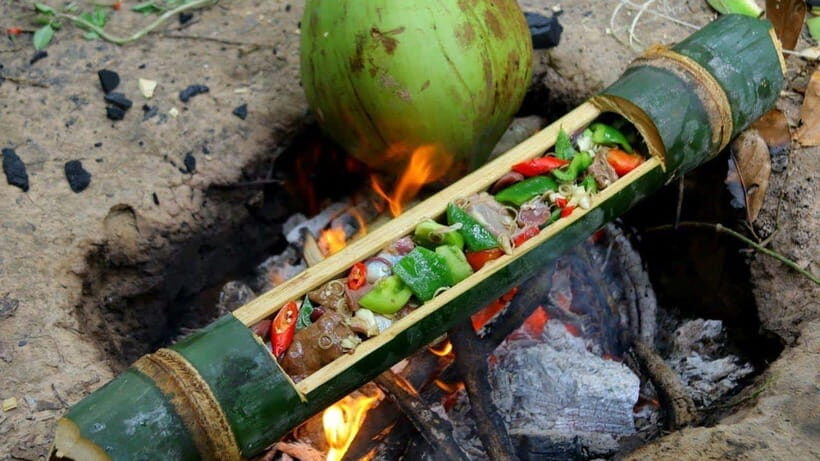
- Cook the food the local way: Fragrant rice plus grilled meat or fish, using bamboo techniques.
- Small group (max 10): Feels personal, with room to choose how hands-on you want to be.
- Hotel transfers included: Pickup and drop-off make it easy to fit into your Luang Prabang day.
Bamboo Forest Cooking in Luang Prabang: what makes it truly special
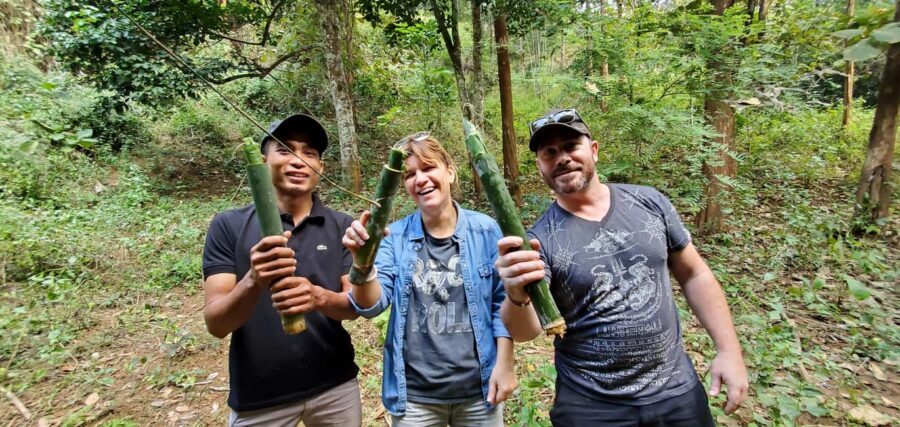
Luang Prabang is full of cooking classes. What makes this one different is the way it connects food to survival skills—growing, spotting plants, making tools, then cooking over bamboo in the forest. You end up seeing how the Khmu tradition treats nature like a pantry and a workshop.
The format also matters. You don’t just get ingredients. You learn how to select them, how to prepare them, and how to use basic materials like bamboo that are right there in the environment. That practical knowledge is the point.
A few more Luang Prabang tours and experiences worth a look

A 9 AM to 3 PM flow you can actually picture
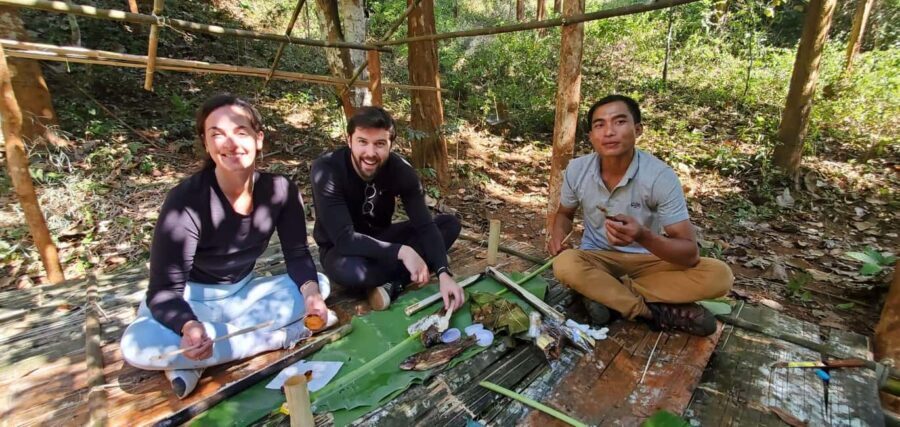
This outing runs roughly 6 hours, starting in the morning and finishing mid-afternoon. The day follows a clear path: farm first, then forest learning, then a bamboo-cooked lunch you eat in the woods.
What you’re doing in each phase feels purposeful. The morning plant and vegetable picking sets you up for the forest portion, where wild-cooking techniques and bamboo utensil making become the focus. By the time lunch arrives, you’re not just hungry—you understand what you’re eating and how it got there.
Start at the vegetable farm: picking food like a local
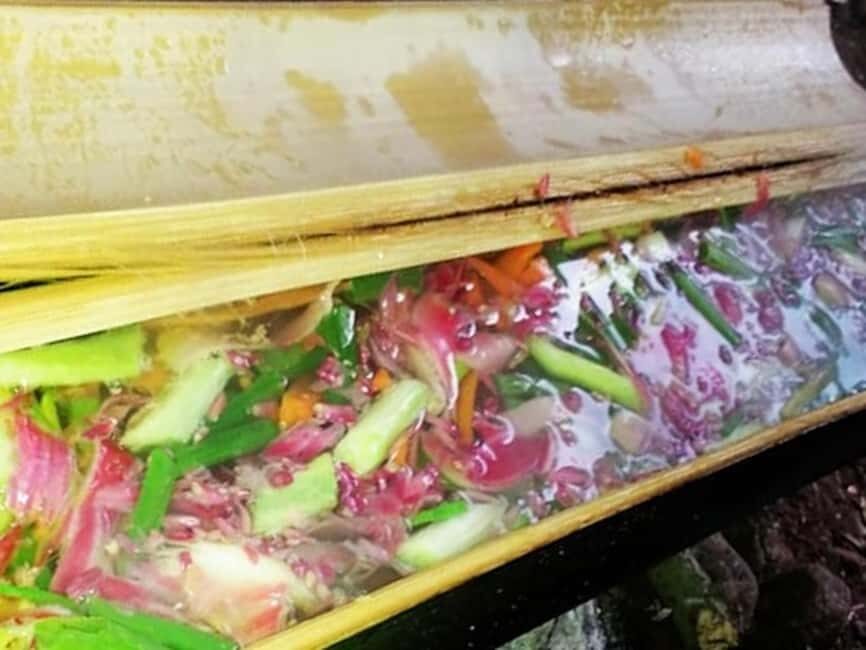
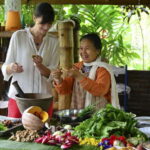
You begin with a visit to an authentic vegetable farm. This isn’t just scenic. It’s where you build your ingredient plan for the meal, including the vegetables and plants you’ll cook later.
Your Khmu guide explains how to identify plants used in village life—edible choices, medicinal options, and everyday-use plants. That’s a big deal if you’re the kind of traveler who likes food but also wants the story behind it.
A practical upside: you’ll be less overwhelmed at the cooking stage. When you know what you picked and why, the whole meal feels like it belongs to the place you’re standing in.
The forest part: learning wild-cooking techniques the hard way (good hard)
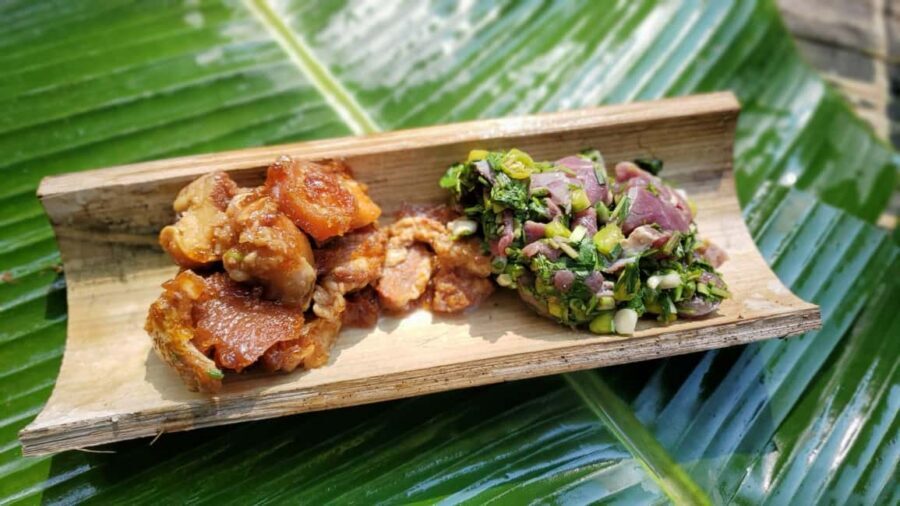
Next you head into the primary forest for ancestral wild-cooking techniques. This is where the class earns its name. You’ll work with bamboo—not just use it—so you can understand how it functions as cookware.
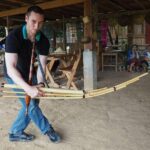
The guide shows you how to make utensils for drinking and eating, and also how bamboo is selected and prepared for cooking. You learn how bamboo can turn into a practical system: container, cooking tool, and flavor carrier.
This portion is hands-on by design. In one of the guides’ own approaches, the experience is designed so you can be as interactive as you want. You can jump in more or pace yourself, but you’ll still be doing more than just standing nearby.
Making bamboo utensils: your take-home cups and chopsticks
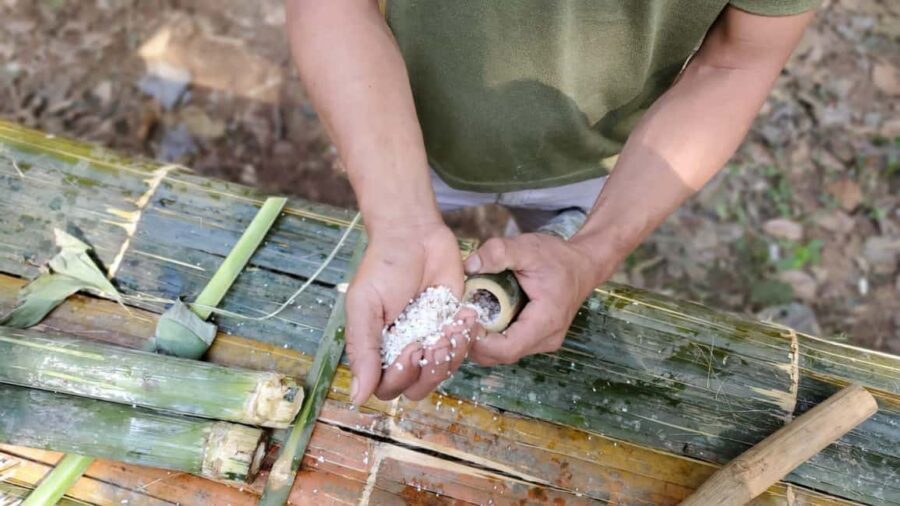
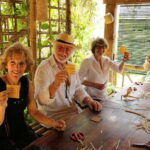
One of the best value moments comes after the forest work: you take home the items you craft. The included souvenirs are a bamboo cup and bamboo chopsticks, made during the session.
This isn’t the usual collect-and-forget souvenir. The reason it lands well is simple: you made it with your own hands using materials sourced in the experience. So when you use the items later—at home or on your next trip—they remind you of the steps that led to them.
A few more Luang Prabang tours and experiences worth a look


Cooking bamboo-cooked rice and grilling meat or fish
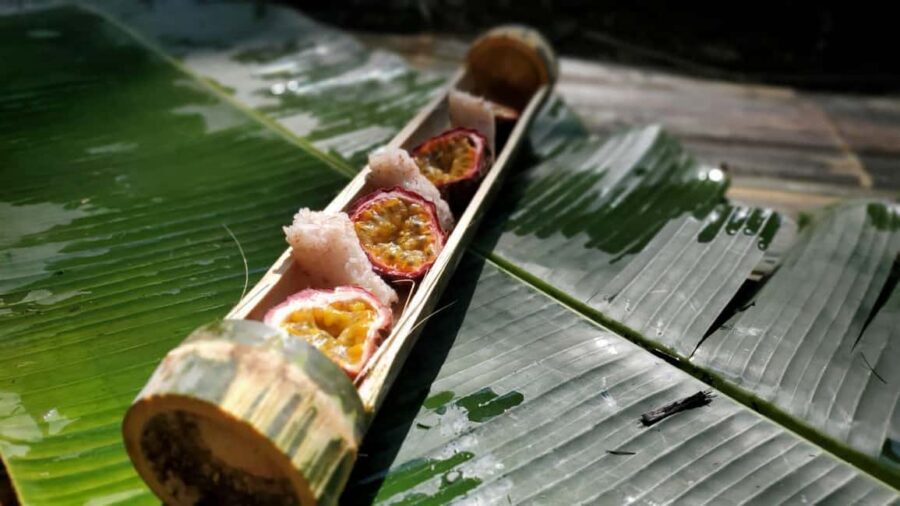
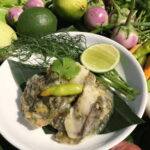
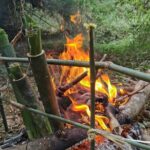
Lunch is cooked in the forest using bamboo techniques. You’ll make fragrant rice using bamboo, and you’ll cook grilled meat or fish as part of the meal.
The key point isn’t just that it tastes good (it should). It’s that you learn the logic behind the method: how heat and timing work with bamboo, and how ingredients are prepped so they end up right inside a bamboo cooking setup.
You’ll also see how dishes are presented in a style that Khmu families still use today. Food here is functional, but it still has a sense of care and rhythm.
Lunch in the woods: convivial, not staged
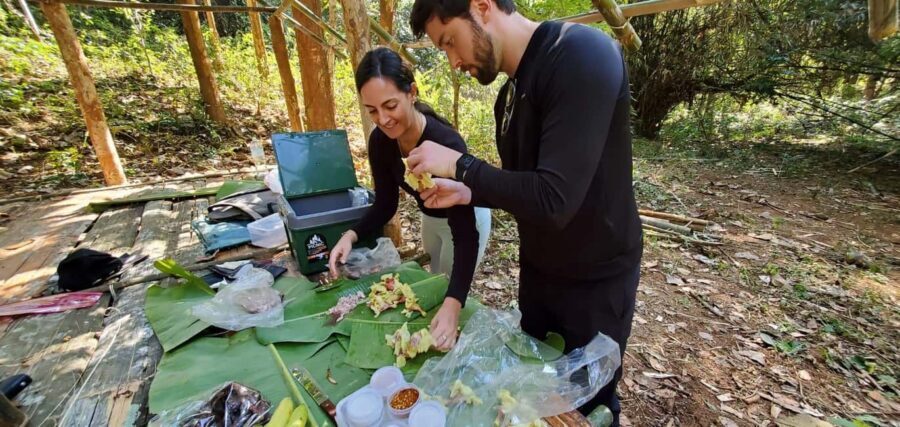
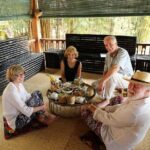
You eat your lunch in the forest, surrounded by nature. The vibe is meant to be convivial and shared—one of those rare meal moments where conversation flows because everyone just worked through the same steps.
Also, the class provides the core ingredients for the meal: rice, meat, fish, fruits, and drinking water. That means you can focus on learning rather than worrying about sourcing anything extra on the spot.
If you have dietary preferences or restrictions, tell the provider ahead of time so they can tailor the experience to your needs. This matters because the whole flow depends on what you can and can’t eat.
The guide makes or breaks the day (and the guides here know their stuff)
This type of class lives or dies by the person leading it. Here, the guides are strong both on language and on subject knowledge. The experience offers English/French/Lao speaking support, and you’ll be able to ask questions while you work.
In one account of the day, the guide was named Peng—Khmu, raised in a life of living off the land, and with agricultural training. That combination is powerful: you get both cultural context and practical agriculture know-how.
Even better, the pace can flex. The outing is designed so you can choose how much to do. You’re not forced into nonstop tasks, but you also won’t be watching from the sidelines.
Included vs. not included: where your $100 goes
At $100 per person for a roughly 6-hour experience, you should look at the cost as payment for three things at once: transportation, ingredient work, and real skill-building.
Included items help justify the price:
- hotel transfer to and from the experience
- all meal ingredients (rice, meat, fish, fruits, drinking water)
- guide support in English/French/Lao
- tax and entrance fees
- your handmade bamboo cup and chopsticks
- an optional craft village stop on the way home
What isn’t included is also straightforward: additional food and drink, plus gratuity.
In practical terms, you’re paying for a guided day where you don’t have to plan anything, and where the “class” is basically a full cultural workflow—farm to forest to meal. That’s typically better value than a short cook-and-eat session, because you learn skills you can’t download from a cookbook.
Who this is for (and who might want an easier day)
This is a great fit if you like:
- hands-on learning
- foraging basics and plant knowledge
- traditional food methods
- getting off the beaten path in a way that still feels safe and guided
- small groups (max 10)
It may be less ideal if you prefer very light activity. Because bamboo cutting and forest walking are part of the experience, you’ll want to be comfortable moving on uneven ground. It’s also not built for people who want a pure restaurant-style meal without participating.
If you’re the kind of traveler who gets impatient when a class turns into a lecture, you’ll probably enjoy this. The guide work is interactive enough that you stay involved.
What to bring for comfort in the forest
The experience asks you to show up prepared. Don’t wing it.
Bring:
- long trousers/pants
- suitable footwear for walking in the forest
- mosquito spray
- a cap or hat
- any essential personal items such as medication
Even if you’re used to warm climates, the forest can be different underfoot and in terms of bugs. Dress for legs and feet, then let the guide handle the rest.
Optional craft village stop: a small add-on if you want it
On the way home, there’s an optional stop at the craft village. If you like seeing how everyday items are made, it’s a nice buffer before you head back to your hotel. If you’d rather keep your day simple and rest sooner, you can skip it.
Should you book Laos SPIRIT’s Bamboo Forest Cooking class?
Book it if you want more than lunch. If you like food with real context—where you pick plants, learn why they’re useful, make tools, and cook in the woods—this is one of the better ways to spend a day around Luang Prabang.
Skip it if you want a low-effort activity or if forest walking sounds like a chore. This day is hands-on on purpose, and that’s also why it feels authentic.
If you’re on the fence, look at your own travel style: do you enjoy getting your hands busy and learning practical skills? If yes, you’ll likely come away with both a full meal and a new way to think about how people cook when the forest is right outside the door.
FAQ
How long is the Bamboo Forest Cooking-class and Farm Visit?
The experience lasts about 6 hours, typically running from 9 AM to 3 PM.
Where does the tour start?
You meet at the Notre showroom.
Is hotel pickup and drop-off included?
Yes. Transfers to and from your hotel are included.
What language(s) are guides available in?
Guides are available in English, French, and Lao.
How many people are in each group?
It’s a small group limited to 10 participants.
What do I learn during the day?
You start at a vegetable farm to pick ingredients and learn edible and medicinal plants, then you go into the forest to learn wild-cooking techniques and make bamboo utensils.
What do I take home?
You take home the bamboo items you make, including a bamboo cup and chopsticks.
Are ingredients provided for lunch?
Yes. The basic ingredients (rice, meat, fish, fruits, and drinking water) are provided.
Is this tour suitable for dietary restrictions?
You should share dietary preferences or restrictions ahead of time so the experience can be tailored.
What’s not included in the price?
Additional food and drink are not included, and gratuity is not included.